Letter Dreams — Something Waiting to Be Read
Receiving one, writing one you never send, an envelope you cannot open. What the unopened letter signals, plus our letter-rule numbers.
Almost nobody sends letters anymore, and people still dream about them. That persistence is itself informative — the symbol survived the technology.
A message with a delay built in
What distinguishes a letter from a conversation is time between sending and reading. Something was decided, committed to, and sent, and it has not yet been received.
So letters in dreams point at communication that is pending. Something said and not heard, or heard and not answered, or written and never sent.
Situation by situation
Receiving a letter. News is coming, or something is being said to you that has not landed yet. If you could not read it, the content has not formed.
An envelope you cannot open. Something you are avoiding knowing. Distinct from not knowing.
Writing a letter. Something you want to say. Whether you addressed it is the detail — an unaddressed letter is a thought without a recipient, which is worth noticing.
A letter you never send. The most common version among people carrying something unresolved with a person they are no longer in contact with.
An old letter found again. Something from an earlier period surfacing with current relevance.
Handwriting you recognize. The relationship matters more than the content.
A letter that arrives too late. Read plainly. A window that closed.
Why the symbol persists
Email and messages arrive instantly, which removes the delay that made letters meaningful. But the psychological delay never went away — people still compose things they do not send, still avoid opening what they know is waiting.
The dream is using an outdated object to describe a current condition, which is a fairly ordinary thing for dreams to do.
In Korea and Japan
A letter in a dream is not read the same way once it comes from the dead.
Korea. Ancestors are expected to communicate. The jesa memorial rite maintains an open line between the living and the dead, and a dream in which a deceased grandparent delivers something — words, an object, a letter — is treated as an instruction to be acted on, not as a symptom of grief. People rearrange plans over these.
Japan. The equivalent is quieter but real. Written messages carry heavier weight in a culture that keeps formal letter conventions alive — seasonal greetings, ritual openers, the nengajō new year card. A letter dream lands closer to obligation than to news.
English-speaking countries. The dominant reading is psychological: the letter is something you have not let yourself say, and the dead sender is unfinished business.
The same envelope arrives as a duty, a message, or a symptom depending on where you wake up.
The numbers
“letter” → L=12, E=5, T=20, T=20, E=5, R=18
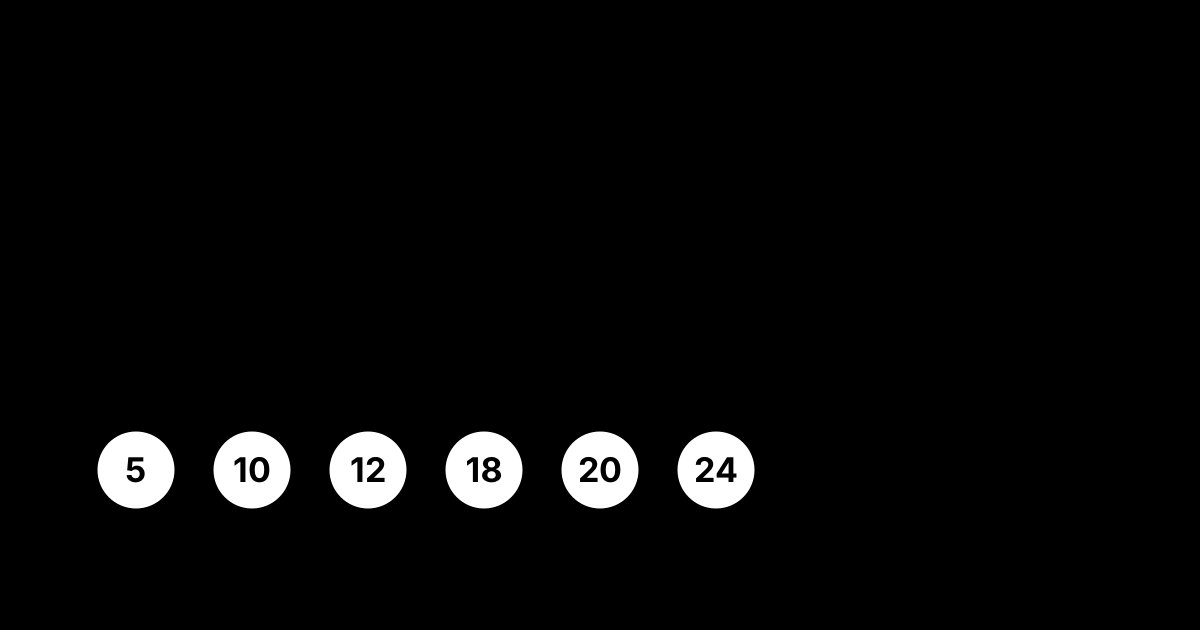
- 5, 10, 12, 18, 20, 24
The repeats collapse to four distinct letters; 10 and 24 come from doubling.
Among these six, 12 has come up 133 times and 20 has come up 113 times across 1,702 recorded Powerball draws. A number that has appeared often is not more likely next time.
The counts below are historical Powerball records. Every draw is independent.
Numbers from this dream
- 5
- 10
- 12
- 18
- 20
- 24
How often these numbers have been drawn
Counts compiled from actual draw results.
Powerball
Compiled from 1,702 draws up to draw 2090. Counts cover main numbers only; the Powerball is tracked separately.
| Number | Times drawn | Share |
|---|---|---|
| 5 | 118 | |
| 10 | 124 | |
| 12 | 133 | |
| 18 | 126 | |
| 20 | 113 | |
| 24 | 127 |
Latest draw 2090 · September 7, 2026
- 15
- 19
- 28
- 39
- 56
- 3
Common questions
Does it matter whether I opened the letter?
It is the main thing. An unopened letter is news you have not faced yet; opening it and finding it blank is the version people report most often, and it usually means the answer you are waiting on has not been decided by anyone yet.
What if the letter was from someone who has died?
Traditions differ sharply here. English-language readings tend toward grief and unfinished conversation. In Korea and Japan a message from an ancestor is read as instruction rather than sorrow, and is often taken seriously enough to act on.
Why letters and not texts?
Dreams keep old objects long after waking life drops them. A letter carries a delay a text does not, so it is a better container for something arriving that you cannot hurry or answer immediately.
Related dreams
-
 Airplane Dreams — Committed Until It Lands
-
 Book Dreams — Knowledge That Is Not Yours Yet
-
 Car Dreams — Who Is Driving Tells You Everything
-
 Clothes Dreams — Including the One Where You Are Naked
-
 Door Dreams — Open, Locked, or One You Did Not Notice
-
 Hospital Dreams — Admitting You Cannot Handle It Alone