Car Dreams — Who Is Driving Tells You Everything
Brakes that fail, a back seat you cannot reach the wheel from, someone else at the controls. Car dreams are about agency, and the details are specific.
Car dreams are unusually literal, which is why they are among the more useful ones to pay attention to. A car is a thing you steer, accelerate, and stop. Dreams use it for exactly that: control over where your life is going.
Who was driving
This is the first question and it usually answers the dream.
You were driving, and it went fine. Agency intact. Not much more to read.
Someone else was driving. Someone or something else is setting the direction. If you know who it was, the dream is about that relationship. If they drove well, it may be fine. If you were tense the whole way, it is not.
You were in the back seat with no way to reach the wheel. One of the more distinct dream images people report, and it means what it looks like. A situation is moving and you are in it without input.
No one was driving. Drift. A stretch where things are happening without anyone deciding.
What the car did
Brakes that will not work. The most reported car dream by a distance. It reads as an inability to slow something down — a commitment that has built momentum past the point where stopping feels possible. Worth noting that the dream is about the feeling of not being able to stop, which is not the same as actually not being able to.
Accelerating out of control. Same family. Pace exceeding comfort.
A crash. Less ominous than it feels. Usually about a collision of commitments rather than physical risk.
A car that will not start. Something you intend to begin and have not.
Getting lost while driving. You know you are going somewhere; the route is the problem.
A car that has been stolen or is missing. Autonomy taken. Frequently reported during periods of heavy obligation to other people.
Driving in the dark with the headlights off. Not a control problem — an information problem. You are steering competently into a space you cannot see. Note whether you slowed down, because the dream almost always makes a point of whether you did.
Reversing, especially for a long way. Undoing. Interpretation does not read backwards as failure here; reversing is a deliberate manoeuvre. The question is whether you could see where you were going.
A car full of people. Everyone’s destination in one vehicle. Who was talking, and whether anyone was giving directions, tends to be the whole dream.
Driving a car you have never owned. Operating with resources that are not yours — a borrowed position, someone else’s authority, a role you are filling temporarily. If it drove badly, that is the dream’s comment on the fit.
Driving on the wrong side of the road. Doing something correctly by a set of rules nobody around you is using. Reported often by people who have actually moved countries, and it generalises cleanly.
Driving into water. The one place a car cannot help you. Read as a direction that worked right up until the conditions changed, rather than as catastrophe.
Being pulled over. Authority interrupting momentum. Whether you had done anything wrong is usually beside the point; the dream is about being stopped by someone entitled to stop you.
A car moving with nobody steering, or steering itself. Distinct from drift. Something is competently running without you, which is either relief or redundancy depending on how the dream felt.
The dream book background
American dream books, sold from the 1800s onward, paired dream symbols with numbers for the street numbers game. Later editions added cars as cars became ordinary. We do not reprint their numbers — the books disagreed, and treating one as authoritative would be inventing an authority that never existed.
What the English-language tradition brings
No culture has loaded more meaning onto a car than the English-speaking one, and the dream inherits all of it.
The licence as a rite of passage. In the United States especially, the driving test is the ceremony that marks the end of childhood. It arrives before voting, before legal drinking, before leaving home, and it is the first thing that makes a teenager genuinely hard to supervise. A car is the first private room many Americans ever get. That is why a dream about losing control of one lands harder than a dream about missing a train.
The open road. On the Road, Route 66, the road trip as a format for finding out who you are. English has an entire genre in which the destination is irrelevant and the driving is the point. A dream of being driven somewhere by someone else cuts directly against that inheritance, which is part of why it registers as uncomfortable even when the driver is competent.
The idioms, which are almost a glossary for this dream. In the driver’s seat for being in charge. A backseat driver for someone with opinions and no controls. Asleep at the wheel for negligence. Take the wheel for assuming responsibility. Spinning your wheels for effort without movement. Life in the fast lane, hit the brakes, slam on the brakes, a crash course, running out of gas. English was already using the car as a model of agency before anyone wrote a dream dictionary about it.
That is worth stating because it means the readings on this page are not imported from anywhere. The language got there first.
In Korea and Japan
In neither country is the car the unquestioned default it is in English, and the rules around owning one differ sharply.
Japan. You cannot register a car without proving you have somewhere to park it — the shako shōmei. The car and its place are legally inseparable, and in dense cities many people simply do not own one. So a Japanese car dream leans toward something maintained rather than something essential.
Korea. Two things stand out. Car models carry social signalling openly, and there is daeri unjeon — a nationwide network of substitute drivers you call after drinking, who drive your own car home for you. Neither Japan nor the English-speaking world has that at the same scale.
A parking certificate and a substitute driver — two countries, two entirely different relationships to the same machine.
The Taiwanese layer
In Taiwan the dream may not be a car dream at all, and the vehicle that replaces it changes every reading on this page.
The scooter is the default. Registered scooters number in the millions on an island of around twenty-three million people, and the wave of them pulling away from a green light is one of the defining sights of a Taiwanese city. For most Taiwanese readers, the dream of a vehicle is a dream of a scooter — which means no cabin, no doors, nobody else at the controls and no back seat to be stuck in. Several of the versions above do not exist there. The passenger dream becomes a dream about riding behind someone, which carries a specific intimacy a car passenger does not have.
The word is also an insult. In Taiwanese slang the term for the scooter doubles as a mild complaint about a person — call someone that and you are saying they are being difficult or unreasonable. No other culture on this site has a vehicle that is also a character judgement.
Vehicles get blessed. New cars and scooters are commonly taken to a temple, or past one, for a safety blessing, and a ping’an fu — a safety amulet in a small cloth pouch — hanging from the mirror is entirely ordinary. Deities have portfolios in Taiwanese practice, and road safety is one of them. So a Taiwanese reader has somewhere to take a frightening driving dream, which English speakers simply do not.
Roadside offerings. At Ghost Month and after accidents, offerings appear at the roadside, and some drivers will not take particular stretches of road at night. The road itself is treated as a place with history and occupants, not as neutral infrastructure.
A scooter instead of a car, an insult, an amulet on the mirror, and a road with its own dead. The American car is freedom with a licence attached.
The numbers
“car” → C=3, A=1, R=18
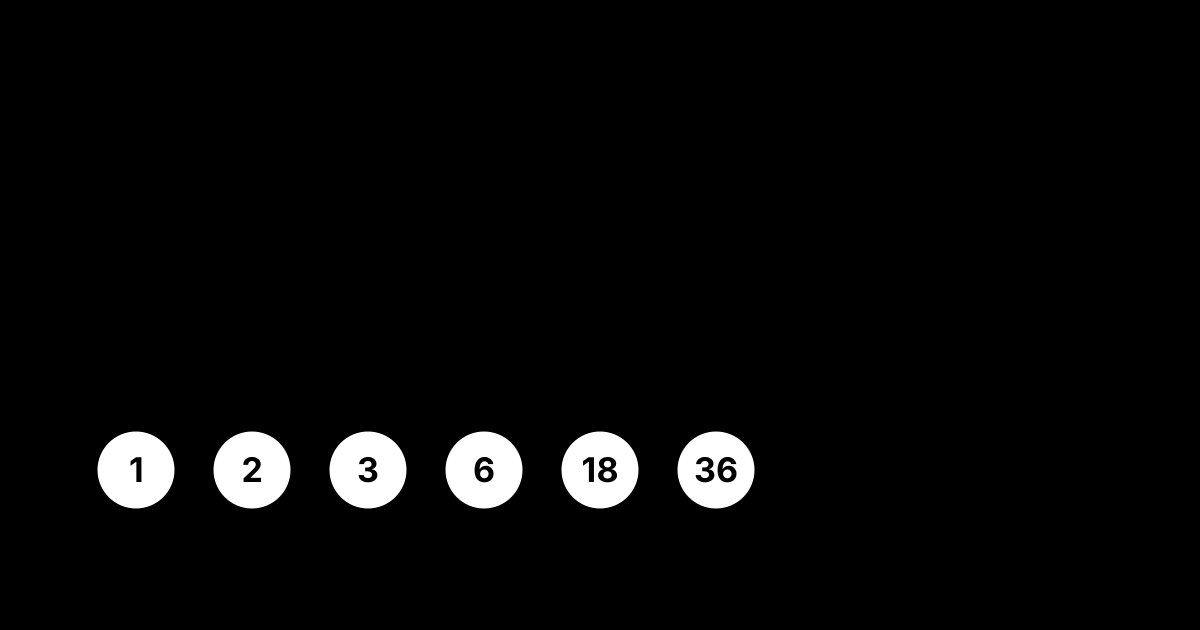
- 1, 2, 3, 6, 18, 36
Three letters, then multiples: 2 and 6 from 1 and 3, and 36 from 18 doubled.
Among these six, 36 has come up 142 times and 1 has come up 116 times across 1,702 recorded Powerball draws. A record of past draws, not a forecast.
The counts below record actual Powerball draws. They are a record of the past. If a car dream has you unsettled, the productive question is what you feel unable to slow down — that is something you can act on.
Numbers from this dream
- 1
- 2
- 3
- 6
- 18
- 36
How often these numbers have been drawn
Counts compiled from actual draw results.
Powerball
Compiled from 1,702 draws up to draw 2090. Counts cover main numbers only; the Powerball is tracked separately.
| Number | Times drawn | Share |
|---|---|---|
| 1 | 116 | |
| 2 | 131 | |
| 3 | 138 | |
| 6 | 132 | |
| 18 | 126 | |
| 36 | 142 |
Latest draw 2090 · September 7, 2026
- 15
- 19
- 28
- 39
- 56
- 3
Common questions
Does it matter who was driving?
It is the first thing to establish. Driving yourself, riding as a passenger, and being in a car with nobody at the wheel are three different dreams, and the rest of the detail hangs off that.
What do failing brakes mean?
Wanting to stop and not being able to. The structure is the meaning. It fits situations where the speed is not the problem — the inability to slow it down is.
I could not find where I parked.
Common, and closer to losing access than to losing an object. The car is still yours; you just cannot reach it, which usually maps onto something available in principle but not in practice.
What does driving in the dark with no headlights mean?
Movement without visibility, which is a different complaint from losing control. The car is working, you are steering, and the information is missing — which fits decisions being made on schedule with less than you would like to know. Worth noting whether you slowed down, because the dream usually makes a point of whether you did.
Related dreams
-
 Airplane Dreams — Committed Until It Lands
-
 Book Dreams — Knowledge That Is Not Yours Yet
-
 Clothes Dreams — Including the One Where You Are Naked
-
 Door Dreams — Open, Locked, or One You Did Not Notice
-
 Hospital Dreams — Admitting You Cannot Handle It Alone
-
 House Dreams — Rooms You Did Not Know Were There