Tree Dreams — Roots, Growth, and What Falls
Trees stand for the long structures in a life — family, foundations, things planted before you. What health, fruit and falling signal. Plus the numbers.
Trees show up in dreams more often than people expect, and they are read differently from almost every other natural image.
The long structure
Most dream symbols concern a person’s own life. Trees concern the things that were there before it and will be there after — family, inheritance, foundations someone else laid.
The language gives it away. We speak of family trees, of roots, of branches of a family. The metaphor is old enough that dreams use it without needing to explain itself.
So a tree dream is usually not about this week. It is about the long structure you are standing in.
The state of the tree
Large and full. Foundations are sound. If you were looking up at it, the reading is about something older and larger than you that is holding.
Bearing fruit. Results are close. Picking the fruit strengthens it.
In blossom. Before the result, but pointed the right way.
Bare or dry. Depleted — though a winter tree is not a dead tree, and the reading often softens to a resting period rather than a loss.
Falling. The one people worry about. Read the details: whether it was uprooted or snapped, and whether the roots stayed. Roots remaining carries the meaning that it grows back.
What you were doing
Planting. A beginning, with the implication that it is meant to last.
Climbing. Building upward on an existing base.
Cutting one down. A deliberate ending. Sometimes correct and sometimes worth a second look — the dream is recording that you were the one holding the axe.
Sitting under one. Shelter that already exists. Often read as gratitude the dreamer has not consciously registered.
Reaching for fruit you cannot get to. The structure is sound and the result is out of range. Read it as timing or as scale rather than as failure — the branch is simply higher than your arms are long.
A hollow tree. Standing and empty. The most unsettling version, and it tends to point at an arrangement that still looks intact from the outside. Note whether it was still in leaf, because a hollow tree can carry a full crown for years.
Roots pushing up through a path or a floor. What was buried is now in the way. Family history, an old obligation, something that was supposed to stay below the surface and has started to lift the paving.
A tree indoors, or growing through a building. Two structures occupying the same space. Usually reported when something long-term has arrived in the middle of ordinary life and cannot be worked around.
Blossom out of season. A good sign arriving at the wrong moment. The dream is not warning you off it — it is noting that the calendar and the event do not agree.
Leaves falling, or a tree being stripped by wind. Loss that is partial and probably cyclical. The trunk is not the issue in this version, which is the reassuring part.
One tree alone in open ground. Exposed and conspicuous. Often read as a person carrying a structure by themselves, and the dream usually knows whether that is sustainable.
Planting with somebody else. A beginning that includes a commitment from another person. Who was holding the spade is the detail worth recovering.
The species carries weight
If you remember what kind of tree it was, start there. Pine stands for endurance across East Asia and holds its colour through winter. Willow bends and carries a note of grief in several traditions. Fruit trees are read by their stage rather than their species. The oak is the English entry — solidity, age, and a national emblem with a king hidden in one of them.
What the English tradition supplies
The vocabulary is so settled that it hides itself. Family trees, roots, branches of a family, going out on a limb, the apple that does not fall far from the tree, not being able to see the wood for the trees, turning over a new leaf. English thinks about descent and structure in timber by default.
The underlying images are older than the idioms. Eden has two named trees and the whole story turns on fruit from one of them. Norse myth hangs the nine worlds on a single ash. And Jung wrote a long study of the tree as a symbol of the self — something that grows by its own schedule, cannot be hurried, and is rooted in material the grower did not choose. That is a precise description of what a tree dream usually turns out to be about.
So the English reading has depth but no shrine. A tree is a metaphor for a family, a figure for patience, and occasionally a national emblem. It is not somewhere you leave offerings.
In Korea, Japan and Taiwan
The tree is not scenery in any of these three. It is often the oldest thing in the village.
Korea. Nearly every traditional village had a dangsan namu — a guardian tree, usually a zelkova, standing at the entrance. It received offerings, village decisions were made beneath it, and cutting one down was believed to bring misfortune on the whole settlement. A tree dream in Korea can be about the village rather than about you. Many of these trees are still standing and are formally protected.
Japan. The equivalent is the shinboku, a sacred tree marked with a shimenawa rope, often within a shrine’s grounds. The rope does not protect the tree — it marks where the god is. The older idea underneath it is the yorishiro, an object a deity descends into, and a tall tree is the standard one. Camphor trees a thousand years old are ordinary sights, and some shrines are built around a tree that was there first.
Taiwan. Old banyans carry the same role, and a large one may have a small shrine at its base with the Earth God installed. The aerial roots make a single banyan look like a grove, which is part of why they are treated as elders.
The Taiwanese layer
Taiwan does not treat an old tree as scenery, as timber, or even quite as a plant.
Some trees are gods. The term is shenmu, divine tree, and it is used without irony for the giant cypresses in the high mountains and for any village tree old enough to have outlived everyone’s grandparents. Red cloth is tied around the trunk, incense is burned in front of it, and the tree receives requests. A tree dream in Taiwan can be a dream about a deity, which is not a reading available in English at all.
The banyan is a public building. A large one shades a stone table, and the table collects elders, chess, tea and the slow business of a neighbourhood. Cutting one down is still a local controversy rather than a landscaping decision, and old specimens are registered and protected. If the dream had people under the tree, that is the Taiwanese reading of it.
Ancestors and ground are the same subject. At Qingming, families clear the growth around ancestral graves and make offerings there, which ties the line of descent to a specific patch of earth and whatever grows on it. The English family tree is a diagram. Here the connection between roots and ancestors is a place you go to with a hoe.
Species are read as a set. Pine, bamboo and plum are the three that hold through winter, and they appear together on scrolls and at new year. Pine is endurance, so a dreamed pine points toward lasting rather than growing.
A tree with incense in front of it, a stone table under a banyan, a grave swept once a year. English mostly has family trees, roots, and a branch to go out on.
The numbers tradition
American dream books, sold from the 1800s into the twentieth century, listed dream symbols alongside numbers for the street numbers game. We do not reprint them; the various editions contradicted each other and none carried real authority. What we publish instead is a rule anyone can check.
The numbers
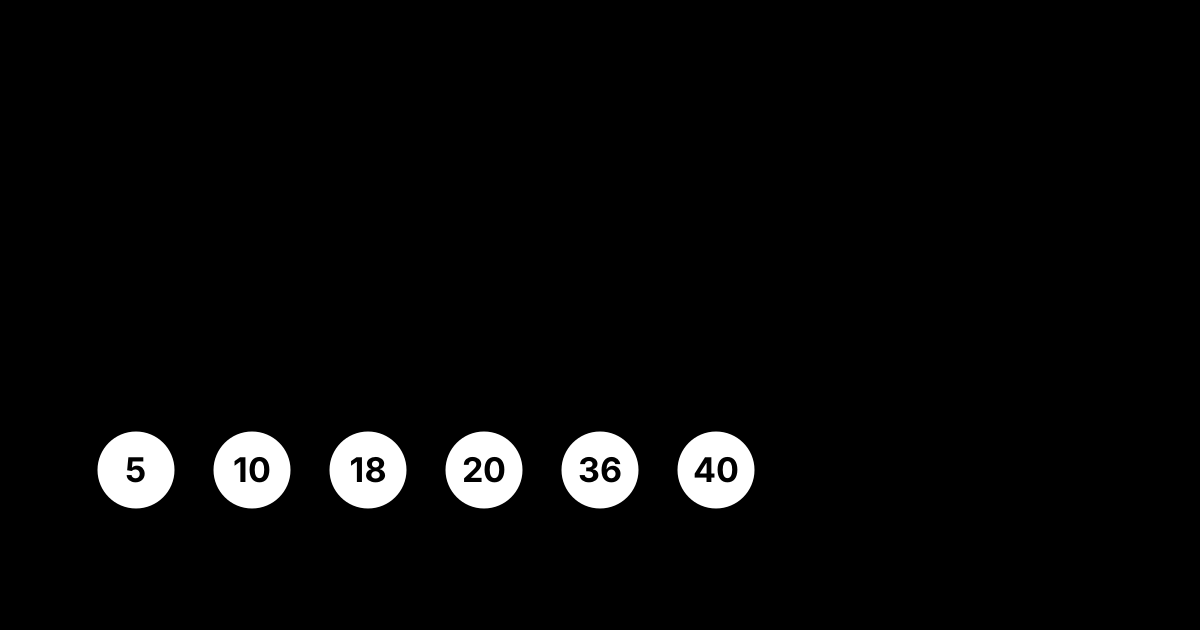
“tree” → T=20, R=18, E=5, E=5
- 5, 10, 18, 20, 36, 40
The repeated E collapses to three distinct letters. Multiples supply the rest: 10 and 40 from 5 and 20, 36 from 18.
Among these six, 36 has come up 142 times and 20 has come up 113 times across 1,702 recorded Powerball draws. A record of past draws, not a forecast.
The counts below record real Powerball draws. They tell you what has happened, not what will.
Numbers from this dream
- 5
- 10
- 18
- 20
- 36
- 40
How often these numbers have been drawn
Counts compiled from actual draw results.
Powerball
Compiled from 1,702 draws up to draw 2090. Counts cover main numbers only; the Powerball is tracked separately.
| Number | Times drawn | Share |
|---|---|---|
| 5 | 118 | |
| 10 | 124 | |
| 18 | 126 | |
| 20 | 113 | |
| 36 | 142 | |
| 40 | 130 |
Latest draw 2090 · September 7, 2026
- 15
- 19
- 28
- 39
- 56
- 3
Common questions
Does the type of tree matter?
More than the condition does in some traditions. A pine, a willow and a fruit tree carry different weight across East Asia, and if you remember the species it is usually the better starting point.
What does a fallen tree mean?
Something long-standing giving way. Trees are the standard image for what outlasts you, so a fallen one tends to point at a fixture rather than at a recent arrangement.
Is climbing a tree significant?
It is worth separating from climbing anything else. A tree is climbed for a view or for fruit, not to reach a summit, so the question is usually what you were after rather than how high you got.
What if it was a whole forest rather than one tree?
Different dream, and worth treating as such. A single tree is a structure you can stand in relation to; a forest is an environment you are inside. The reading moves from inheritance and foundations toward not being able to see out, which is why the old complaint about missing the wood for the trees is more useful here than any species chart.
Related dreams
-
 Earthquake Dreams — When the Assumption Moves
-
 Fire Dreams — Why the Frightening Ones Often Read Well
-
 Flower Dreams — Peak Season, and Its Shortness
-
 Moon Dreams — The Phase Is the Reading
-
 Mountain Dreams — Climbing It Versus Looking At It
-
 Ocean Dreams — Scale, Distance, and the Water You Cannot See Across