Moon Dreams — The Phase Is the Reading
Full, new, waning, hidden behind cloud. The moon changes shape, and which shape you saw is most of the interpretation.
If you can recall what shape the moon was, you have most of the interpretation already.
A body that keeps changing
The sun looks the same every day. The moon does not — and for most of human history, its phase was how people knew what day it was.
That is the root of the reading. The moon marks which stage of something you are in.
By phase
Full. The peak. Something has reached its maximum. The complication built into the image is that the next phase is decline — so full-moon dreams often carry satisfaction and a small undertow at once. That is not pessimism; it is the shape of the symbol.
New, or a thin crescent. A beginning. Slight and unimpressive, and heading toward fullness.
Waning. Releasing. A tidying phase rather than a losing one.
Two moons, or an impossibly large one. Expectations that have detached from the actual scale of things.
How it appeared
Behind cloud. The situation is getting harder to see.
Reflected in water. You are looking at a reflection rather than the thing. Worth asking whether you are working from secondhand information.
Red or unusually colored. Strong feeling in the mix.
Looking up at it. A clear aspiration that remains out of reach — which is a normal state, not a problem.
Rising. Something beginning its visible phase. Moonrise is reported less often than a full moon and is easier to read: it is on the way up.
Setting, or sinking. A stage closing. Not a loss — the shape of this symbol always has the next phase built into it.
A moon in daylight. Faint, and in the wrong place. Something out of its proper stage, or a part of your life turning up where it does not belong.
Moonlight rather than the moon. You never saw the source, only what it lit. These are about indirect knowledge, and they pair with the reflection reading above.
The moon going out. Rarer and more alarming than cloud. The thing you were using to tell the time is simply gone, which reads as losing your bearings rather than losing the moon.
An eclipse. Something interposed. Worth asking what was between you and it, since in the image it is never the moon’s own doing.
Impossibly close. Scale again — the trouble is not the moon but how near it got.
The moon and dream books
The moon appeared in every American dream book — those pocket guides sold from the 1800s into the mid-twentieth century that listed dream symbols with numbers for the street numbers game. Celestial images were among the most looked-up entries.
We do not reprint those numbers. Editions contradicted each other, and presenting one as authoritative would mean fabricating authority. Our numbers come from a stated rule.
What English keeps of it
English keeps the moon mostly as figures of speech and a piece of medical history. Lunatic and lunacy come straight from luna, out of the long-held belief that the moon’s phase moved people’s minds; the words outlived the belief. Once in a blue moon makes it a rarity, over the moon makes it joy, promise the moon makes it the thing nobody can deliver. What links them is distance — the moon in English is what you cannot reach.
Depth psychology gave it a role. Jung paired sun and moon as opposing principles and attached the moon to the anima, the receptive and unlit side of a personality, against the solar and conscious side. You do not have to take on the whole framework to find the split useful: a sun dream and a moon dream genuinely feel different, and the difference sits roughly between being seen and seeing.
The practical reading still stays with the phase, because the phase is the only part of the image that carries information.
In Korea, Japan and Taiwan
The moon is the strongest case on this site for the calendar shaping the symbol.
All three still run a lunar calendar underneath the solar one. Lunar New Year is the major holiday, and it moves. So the moon is not a mood in East Asia — it is the thing that tells you what day it is.
Korea. Chuseok falls on the fifteenth of the eighth lunar month, at full moon, and the custom is to make a wish while looking at it. There is also Jeongwol Daeboreum, the first full moon of the year, with its own foods and fire rituals. A full moon dream in Korea is close to a wish being made.
Taiwan. The Mid-Autumn Festival shares the same night, and the shape of the mooncake repeats the shape of the moon and of the reunited family; pomelo sits on the same table, and in recent decades so does a barbecue. The layer underneath is the story of Chang’e, who took an elixir and could not come back down, with the jade rabbit for company. But the full moon is not only reunion there. The fifteenth of the seventh lunar month also falls at full moon, in the middle of Ghost Month, and that is when Pudu offerings are laid out for spirits with nobody left to feed them. Two full moons in the year, one for the living family and one for the dead.
Japan. Tsukimi, moon-viewing, is deliberately quiet — rabbit pounding rice on the moon’s surface rather than a man’s face. Japanese has a verb for the moon being obscured by autumn cloud, treated as its own worthwhile sight.
A wish, a reunion, a rabbit. In English the moon is mostly lunacy and tides.
The numbers
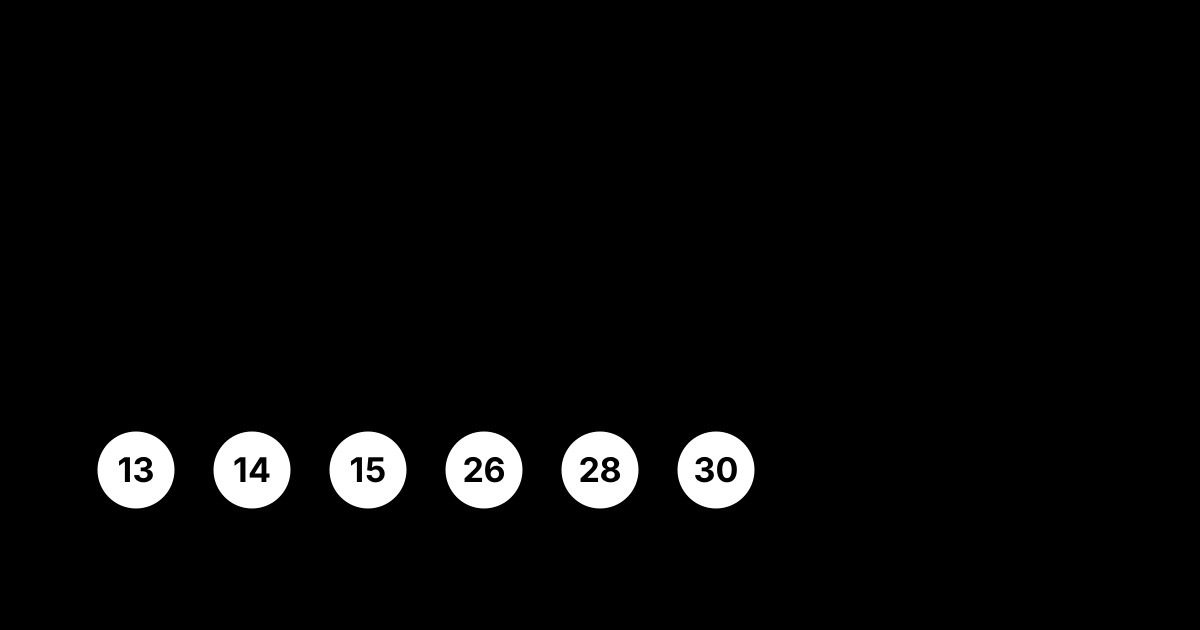
“moon” → M=13, O=15, O=15, N=14
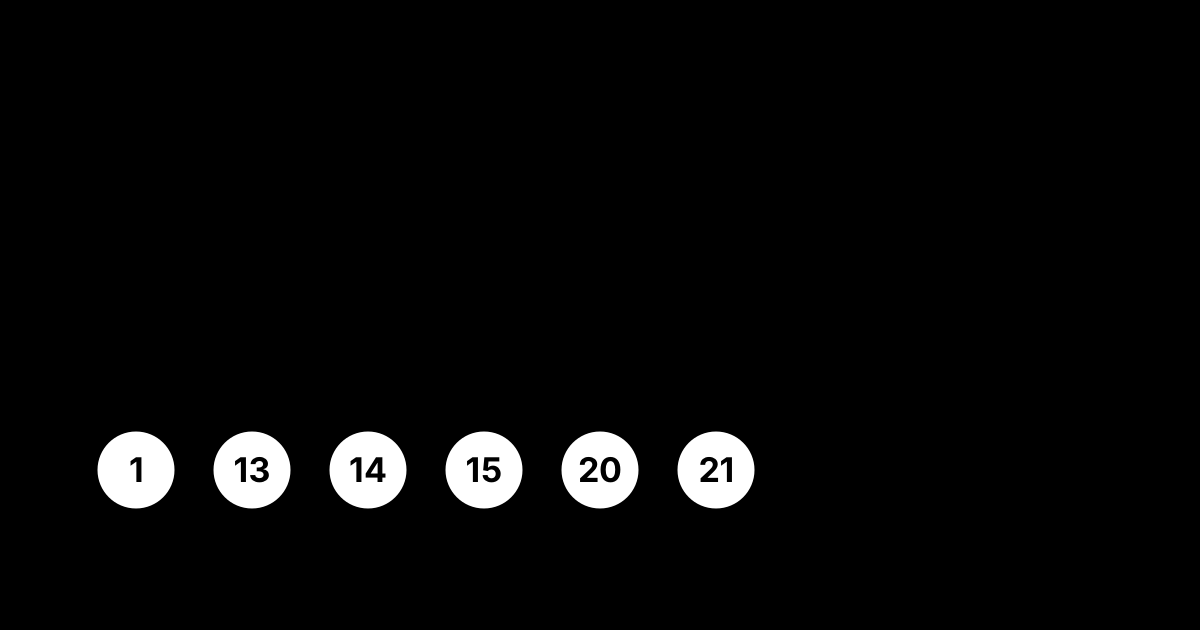
- 13, 14, 15, 26, 28, 30
The doubled O collapses to three distinct letters; 26, 28 and 30 come from doubling each.
Among these six, 28 has come up 150 times and 13 has come up 108 times across 1,702 recorded Powerball draws. Every draw is independent, and no number is ever due.
The counts below record actual Powerball draws — a record of the past. Every draw is independent, and no number is ever due.
Numbers from this dream
- 13
- 14
- 15
- 26
- 28
- 30
How often these numbers have been drawn
Counts compiled from actual draw results.
Powerball
Compiled from 1,702 draws up to draw 2090. Counts cover main numbers only; the Powerball is tracked separately.
| Number | Times drawn | Share |
|---|---|---|
| 13 | 108 | |
| 14 | 123 | |
| 15 | 118 | |
| 26 | 109 | |
| 28 | 150 | |
| 30 | 126 |
Latest draw 2090 · September 7, 2026
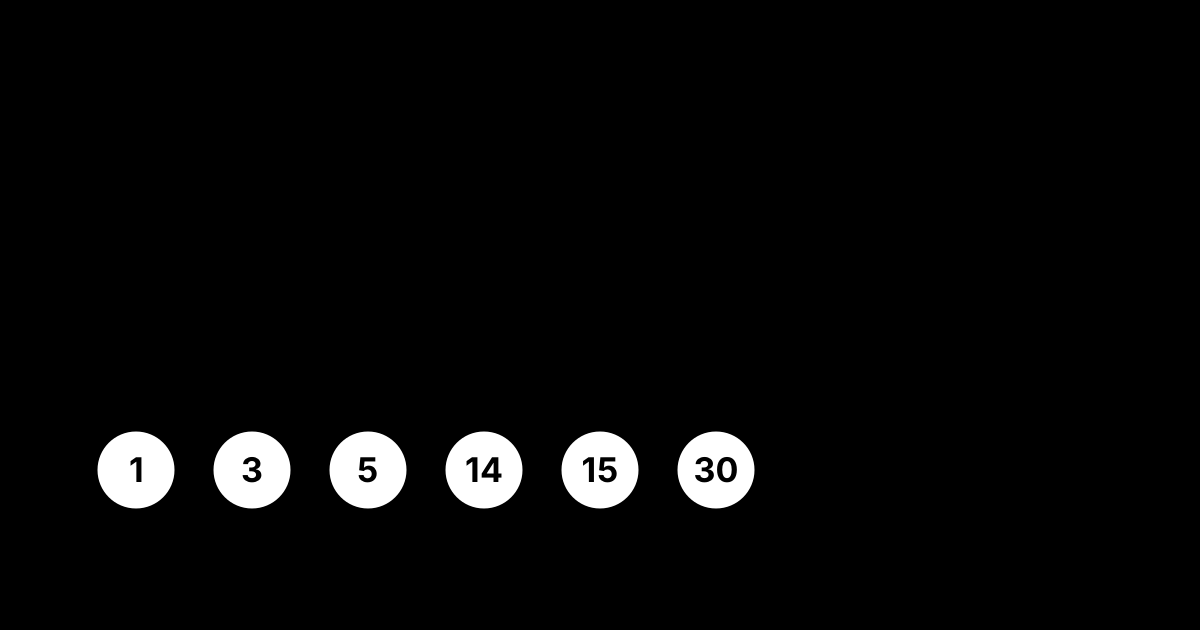
- 15
- 19
- 28
- 39
- 56
- 3
Common questions
Does the phase of the moon in the dream matter?
It is the most useful detail to hold on to. A new moon, a full moon and a waning one point in different directions, and in East Asian traditions the phase is tied to an actual calendar rather than to mood.
What does a red or blood moon mean?
Historically it was read as an omen almost everywhere, which is worth knowing because the fear may be inherited rather than personal. A lunar eclipse turns the moon red for ordinary optical reasons, and it was recorded as a warning in most premodern chronicles.
What if I only saw moonlight and never the moon itself?
Then the dream was about indirect knowledge rather than about the moon. You had the light and not the source, which pairs with the reading for a moon seen in water. The question worth asking is what you currently know only secondhand.
Is dreaming of the moon connected to pregnancy?
In Korea it can be — the moon is one of the recognised conception-dream images. English-language readings connect the moon to cycles more loosely, and the association is with intuition rather than with a specific event.
Related dreams
-
 Earthquake Dreams — When the Assumption Moves
-
 Fire Dreams — Why the Frightening Ones Often Read Well
-
 Flower Dreams — Peak Season, and Its Shortness
-
 Mountain Dreams — Climbing It Versus Looking At It
-
 Ocean Dreams — Scale, Distance, and the Water You Cannot See Across
-
 Rain Dreams — Were You Soaked or Sheltering?