Rooster Dreams — The Animal That Announces Things
A rooster crowing, a fight, a hen and chicks. The bird that marks the boundary between night and morning. Plus the numbers, from a stated rule.
A rooster has one job in the symbolic world: it tells you the night is over.
The announcement
Before clocks, the rooster was the clock. It marked the moment when the dangerous, formless part of the day ended and the ordinary part began.
That role is what the dream borrows. A rooster stands for something becoming known — an announcement, a disclosure, the end of a period of uncertainty. Whether that is welcome is the reading.
There is a second layer in English specifically: crowing means boasting. Cock of the walk, ruling the roost, something to crow about, cocksure. The rooster is also a symbol of display without much substance behind it, and English has pushed that sense far enough that the word is now mildly comic.
The older English-language inheritance is heavier than the idioms suggest. The weathercock on a church steeple is traditionally connected to the cock that crowed at Peter’s denial, which makes the bird a figure of being found out rather than of boasting — the thing that marks the moment you cannot take back. France keeps the Gallic rooster as a national emblem, where the reading is vigilance and nerve instead. So the Western side of the symbol already runs three ways before any other tradition is consulted.
By situation
Crowing. Something is about to be announced. If the sound woke you inside the dream, the news is arriving whether or not you are ready.
Crowing at the wrong time. An announcement out of sequence — a disclosure landing before it should.
A rooster strutting or displaying. Read the boast. Either someone nearby is performing status, or you are.
Two roosters fighting. Rivalry over position rather than over anything material. Cockfighting sits behind this image, which is worth knowing — it is a symbol built on a blood sport, not a barnyard scene.
A hen with chicks. A different dream. Protection and provision rather than announcement.
Chickens in a yard, undramatic. Ordinary domestic sufficiency. Not everything is a portent.
Catching or chasing one. Trying to control what gets said and when. Chickens are hard to catch, and the dream tends to make that point.
A rooster that will not crow. The symbol inverted. An announcement withheld, or a morning that is not arriving on schedule. Common around news someone has gone quiet about.
A rooster indoors. The announcement is inside the house. People report this version about family matters rather than work — something that is about to be said where you live.
Woken by crowing you cannot locate. You know it is coming and not from where. Read it as anticipation without a source, which is a different state from dread.
A rooster going for you. Spurs, wings, the whole business. Roosters are genuinely aggressive birds, and the dream usually means it — a confrontation about standing or precedence rather than about anything substantive.
Killing or plucking one. Ending a display, or shutting something up. Worth asking whether it was yours.
We do not reprint dream book numbers
American dream books — pocket guides sold from the 1800s into the mid-twentieth century, which paired dream symbols with numbers for the street numbers game — carried rooster entries and disagreed with one another about them. Selecting one edition and presenting it as correct would mean inventing an authority that never existed. Our numbers come from a rule stated below.
The same animal elsewhere
In Korea, the rooster is the tenth sign of the zodiac and the associations are more specific. Crowing at dawn is understood to drive off the things that belong to the night, and roosters appear in folk painting on that basis. The bird is protective, not boastful.
Korean dream tradition also treats hearing a rooster crow as a straightforwardly good omen — the arrival of good news — where the English reading first asks who is bragging. The protective sense is practical rather than decorative: the night held the things you did not want, the crow ended the night, so the bird is on your side.
In Japan, the tenth zodiac sign is read as the bird more broadly, so there is no separate rooster reading; that article covers the same slot.
The Taiwanese layer
In Taiwan the chicken is a household ritual object, and the reason is a pun that only works in Taiwanese Hokkien.
A whole chicken means starting a household. The word for chicken, ke, sounds like the word for family or household, also ke. So a whole boiled chicken is offered at a housewarming and at weddings under the phrase khi-ke — to raise up a household. The bird is not food at that moment; it is the sentence being spoken.
The bride brings chickens. In the chua-lo-ke custom — “leading-the-way chickens” — a pair of live chickens tied with red string travels with the bride to her new home. If they are released and settle, the marriage is said to settle with them.
The offering has rules. The chicken is presented whole, head and feet attached, because a complete bird means a complete beginning.
A pun, a pair on a red string, an unbroken bird. In English the rooster is mostly a wake-up call and a boast.
The numbers
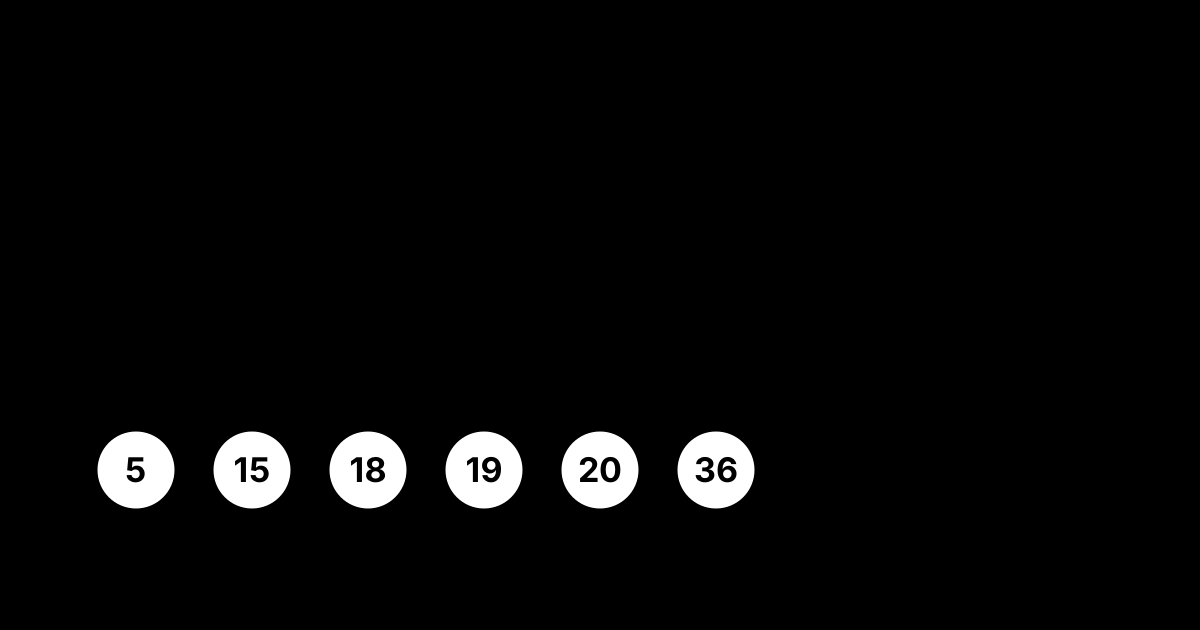
“rooster” → R=18, O=15, O=15, S=19, T=20, E=5, R=18
- 18, 15, 19, 20, 5, 36
Repeats collapse to five values; 36 comes from doubling the first.
Among these six, 36 has come up 143 times and 20 has come up 113 times across 1,724 recorded Powerball draws. Every draw is independent, and no number is ever due.
The counts below record actual Powerball draws — a record of the past. Every draw is independent, and no number is ever due.
Numbers from this dream
- 18
- 15
- 19
- 20
- 5
- 36
How often these numbers have been drawn
Counts compiled from actual draw results.
Powerball
Compiled from 1,724 draws up to draw 2112. Counts cover main numbers only; the Powerball is tracked separately.
| Number | Times drawn | Share |
|---|---|---|
| 18 | 129 | |
| 15 | 121 | |
| 19 | 133 | |
| 20 | 113 | |
| 5 | 120 | |
| 36 | 143 |
Latest draw 2112 · November 4, 2026
- 15
- 34
- 41
- 53
- 56
- 21
Common questions
Does a crowing rooster mean good news?
It marks a boundary rather than a verdict — the end of the night. Whether that reads as relief or as pressure usually depends on whether you were ready for the day to start.
What about a rooster that crows at the wrong time?
Several traditions treat an out-of-hours crow as an ill omen, and the unease may be inherited rather than personal. The practical reading is simpler — something announced itself before you were ready.
Is the rooster different from the hen in dreams?
Usually yes. The rooster is announcement and display; the hen is provision and keeping. If you remember which it was, start there.
What does a rooster that will not crow mean?
It inverts the whole symbol, since crowing is the bird's entire function. The usual reading is an announcement that is being withheld, or a morning that is not arriving on schedule. People report it around news they are waiting on from someone who has gone quiet.