Bear Dreams — Force That Is Usually Not Hunting You
Being chased by a bear, a bear that ignores you, a bear with cubs. What the largest animal in North American dreaming tends to mean.
For North American dreamers the bear is the largest animal that could plausibly appear in real life. That plausibility gives it a weight that lions and tigers do not have here.
Big, and mostly not interested in you
The bear’s defining quality in interpretation is that it is enormously powerful and usually indifferent. Actual bear encounters mostly consist of the bear leaving.
So a bear in a dream tends to stand for a large force that is not personally directed at you — an institution, a market, a family system, an illness. Something that could flatten you and is not trying to.
That distinction matters. A bear dream is rarely about an enemy.
Situation by situation
Being chased. The most reported version. Something large you are moving away from. Worth asking whether it is actually pursuing you or whether you are running from proximity.
A bear that ignores you. Read favorably. The large thing is not concerned with you, which is often the accurate assessment.
A bear with cubs. The specific version where the threat is real — protectiveness, not aggression. Read as encountering someone defending something rather than attacking you.
A bear standing up. Assessment. The animal is looking, not charging.
A sleeping or hibernating bear. Dormant force. Something not currently active that could become so.
A bear in your house. Something large entering a space you thought was private.
Feeding or befriending a bear. Read cautiously in most traditions — a large force treated as tame.
A bear blocking the way you wanted to go. Not pursuit, obstruction. The dream separates the thing that frightens you from the thing stopping you, and here they happen to be the same object. Worth asking whether the route matters more than the bear does.
Watching one from safety — behind glass, from a car, across a river. Scale observed without exposure. People report this version during periods when something large is happening next to their life rather than inside it.
A bear that turned out to be smaller than you thought. Recalibration. Something filed as enormous is being reassessed, and the dream is doing the reassessing before you consciously have.
Fighting a bear. Rare, and rarely about winning. The readable part is the mismatch you accepted. Choosing a confrontation you cannot win on force suggests the stakes are about standing rather than outcome.
A dead bear. Force that is over. Interpretation reads this as the end of something that used to dominate the landscape, with the dream’s tone deciding whether that is relief or loss.
Tracks, scat, or noise with no bear visible. Evidence without the thing. Often the more accurate picture of how large forces actually show up in a life.
A bear eating — berries, a bin, a camp. The animal doing what it is actually there for. A reminder that the thing you read as menace has its own business, and you are not the subject of it.
A toy bear. A different animal entirely, and worth not folding into the rest. Comfort, childhood, something kept.
What the English-language tradition brings
English treats the bear as weather rather than as an enemy, and the vocabulary shows it. A bear market is the clearest case — a market that falls, enormous, impersonal, nobody’s fault, and not aimed at you. That is the same reading this page gives the dream, arriving independently from finance.
The friendlier register is equally strong, and it mostly comes from one incident. On a hunt in 1902 Theodore Roosevelt declined to shoot a bear that had been tethered for him, the refusal was cartooned, and a toymaker named a stuffed bear after him. The teddy bear has been the standard object handed to a frightened child ever since. So English hands a reader two bears from the start — the one in the market and the one in the cot.
Children’s culture filled in the rest. Goldilocks walks into a house belonging to bears and the bears are domestic rather than dangerous. Winnie-the-Pooh is a bear whose defining trait is wanting honey. Smokey Bear spent decades telling Americans to put out their campfires, which makes the bear the voice of caution rather than the thing you need caution about. Even the sky has one — the Great Bear, visible all year in the northern hemisphere, the constellation most English speakers can actually find.
And then there is the plain idiom: bear with me, bear down, unbearable. A separate root, but it keeps the word attached to weight and endurance, which is exactly where the dream sits.
A note on the wider tradition
Bears carry sacred weight in several Indigenous North American traditions and in Ainu practice in northern Japan, where the bear was treated as a deity to be returned to the spirit world with ceremony rather than simply hunted.
Those are living traditions with their own frameworks, and this page does not attempt to represent them. It is worth knowing they exist rather than assuming the psychological reading is the only one.
In Korea and Japan
The bear is the clearest case on this site of one animal doing unrelated jobs in neighbouring countries.
Korea. The bear is at the origin of the nation. In the founding myth a bear and a tiger ask to become human; both are told to stay in a cave eating mugwort and garlic, and the bear is the one who endures it. She becomes a woman and the mother of Dangun, the founder. So the Korean bear stands for patience that pays off — and notably, the tiger is the one who gives up.
Japan. The bear is a real and present animal. Encounters happen, warnings are issued, and people carry bells when hiking. Further north, the Ainu iomante ceremony treats the bear as a god visiting in animal form, to be honoured and sent home. Reverence and danger together.
A founding mother and a visiting god. English mostly has the wilderness.
The Taiwanese layer
Taiwan has exactly one bear, it is rare, and it has become a way of talking about the island itself.
The moon bear. The Formosan black bear is a subspecies of Asian black bear found only in Taiwan, and the white marking on its chest is a rough V or crescent — which is why Asian black bears are called moon bears generally. It lives in the forested central mountain range, numbers are low enough that a confirmed sighting is news, and it is legally protected. A Taiwanese reader meets this animal through conservation campaigns and school material far more often than through anything resembling folklore.
The emblem. Because it exists nowhere else, the black bear works as shorthand for Taiwan in a way no other species manages. It turns up on merchandise, in tourism branding and as a mascot, standing in for the island as a distinct place. That is a political reading as much as a natural one, and it is the dominant association today.
The mountains, and whose they are. The bear’s range overlaps the territories of Taiwan’s Indigenous peoples, and in several of those traditions the black bear was not an animal you hunted casually — an encounter carried consequences and required handling rather than being a trophy. Those are living traditions with their own frameworks and this page does not attempt to speak for them, but the point stands that the bear sits inside somebody’s cosmology and not only inside a conservation budget.
The insult. Spoken Mandarin has a compound meaning roughly dog-bear, gouxiong, used to call someone a coward. Which means the same animal that stands for the island also stands for losing your nerve — a second edge the English reading has no equivalent for.
An endangered emblem, a mountain with owners, and a word for cowardice. The American bear is mostly a thing in the woods and a falling stock market.
The numbers
“bear” → B=2, E=5, A=1, R=18
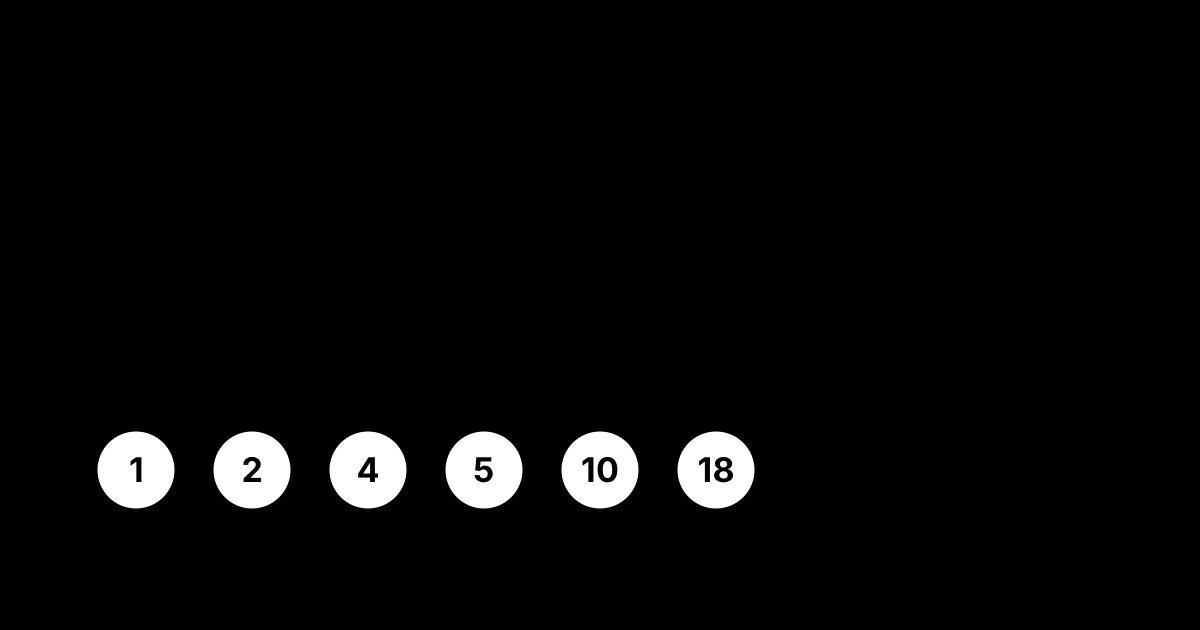
- 1, 2, 4, 5, 10, 18
Four letters, plus 4 and 10 from doubling 2 and 5.
Among these six, 2 has come up 131 times and 4 has come up 116 times across 1,702 recorded Powerball draws. A record of past draws, not a forecast.
The counts below record actual Powerball draws — history, not forecast.
Numbers from this dream
- 1
- 2
- 4
- 5
- 10
- 18
How often these numbers have been drawn
Counts compiled from actual draw results.
Powerball
Compiled from 1,702 draws up to draw 2090. Counts cover main numbers only; the Powerball is tracked separately.
| Number | Times drawn | Share |
|---|---|---|
| 1 | 116 | |
| 2 | 131 | |
| 4 | 116 | |
| 5 | 118 | |
| 10 | 124 | |
| 18 | 126 |
Latest draw 2090 · September 7, 2026
- 15
- 19
- 28
- 39
- 56
- 3
Common questions
Is being chased by a bear a warning?
Read it as scale rather than as prediction. A bear is the largest thing most people can picture meeting on foot, so it tends to stand in for something you cannot simply outmatch. What you did — ran, froze, stood still — is the useful part.
What does a calm or sleeping bear mean?
Held force. A bear that is not currently interested in you is a very different image from one that is, and the dream often turns on whether you disturbed it.
Does a bear cub change the reading?
Considerably, and it introduces the mother. A cub in a dream almost always implies something protective nearby, even if you never saw it.
Does a teddy bear count as a bear dream?
It is a different dream wearing the same animal. A toy bear is a comfort object rather than a force, so the reading moves from scale to reassurance and often to childhood. If the dream slid from one to the other — a toy that became real, or a bear that turned out to be stuffed — that transition is the whole dream and worth reading on its own.