Poop Dreams — Why This Is a Lucky Dream in East Asia
Dreaming of feces, stepping in it, being covered in it. Embarrassing in English, and one of the best possible omens in Korea and Japan. Plus the numbers.
Of all the dream symbols on this site, this is the one where the cultural gap is widest — and it is not close.
In English, it is about shame
The English-language reading is straightforward and mostly negative. Feces in a dream is treated as something you want rid of: waste, embarrassment, a mess you made, a situation you would not want seen.
That is a coherent reading. It is also almost the exact opposite of what half the world thinks.
English does keep two traces of the other reading, and they are worth knowing before you dismiss it.
The first is proverbial. Where there’s muck there’s brass — a northern English saying meaning that dirty work is where the money is. The same instinct sits inside filthy rich, stinking rich, rolling in it, filthy lucre and money laundering. English keeps insisting that money is unclean, and it does so often enough that the association has to be doing something.
The second is psychoanalytic. Freud wrote directly about the equation of feces and money, treating the link as one of the most durable symbolic substitutions there is. Whatever you make of the rest of that theory, the observation itself is the same one Korean and Japanese folk tradition arrived at from the farm side. Two completely unrelated routes to the same pairing.
In Korea and Japan, it is money
In both countries a dream about feces is a famous good omen, specifically tied to money. In Korea, ttong-kkum is so strongly associated with lottery wins that buying a ticket afterward is an actual convention. In Japan the same reading holds.
And the reason is not mystical. It is agricultural economics.
Before chemical fertilizer, human waste was a farm input with a market price. In Edo-period Japan, farmers bought the waste from city tenements, and it was a real line of income for landlords. The material was worth money, so a dream about it meant money.
The English-speaking world had night-soil collectors too, but never turned the material into a priced commodity on anything like that scale, and the symbol never acquired the meaning. The difference in dream interpretation is a difference in agricultural history.
By situation
Given how the readings diverge, the sensible approach is to note both.
Stepping in it. In East Asia this is the strongest version — good fortune arriving by accident, especially if you tried to avoid it. In English it is bad luck and indignity, with the same physical event read in reverse.
A large amount of it. East Asian reading: scale of the good fortune. English reading: the scale of the mess.
Getting it on your body. Contact means acquisition in the East Asian reading. In English it means contamination.
Being disgusted by it. Worth keeping. If the dominant feeling was revulsion, that is real information about how you feel toward something, whichever tradition you prefer.
Producing it yourself. Here the traditions converge. Both read this as release — something held onto for too long finally being let go. It is the one version everybody agrees on.
A blocked toilet. Also broadly agreed: stalled flow, something not moving.
Falling into it. The extreme version, and in Korean tradition the best one there is — full immersion reads as fortune you cannot avoid. The English reaction to the same scene needs no explanation. If any dream demonstrates that interpretation is cultural rather than natural, it is this one.
No toilet anywhere, or one with no door. A different dream in the same setting. The subject is privacy, not waste. Being unable to find somewhere acceptable, or having to go in full view, reads as a private matter with no private place to deal with it, and it is one of the most commonly reported dreams of any kind.
Cleaning it up. Dealing with consequences, usually somebody else’s. Whether you resented it in the dream is the part that carries the meaning.
On money, or on clothes you needed. The two readings collide directly here, and the collision is the content. Something valuable has been made unusable, or something unclean has turned out to be valuable, depending on which tradition you woke up inside.
A baby’s, or an animal’s. The disgust drops away almost entirely, which is informative in itself. Ordinary care rather than contamination — a mess that comes with something you chose to look after.
A toilet in a strange or public place. Read the place. Dreams are specific about where privacy fails, and the location is usually the institution doing the pressuring.
We do not use dream book numbers
American dream books — the pocket guides sold from the 1800s into the mid-twentieth century that assigned numbers to dream symbols for the street numbers game — had entries for this. They disagreed with each other, as they did on everything. Choosing one and presenting it as authoritative would mean manufacturing authority. Our numbers come from a rule you can verify.
The Taiwanese layer
Taiwan gives this dream something the other traditions do not — an established route from the dream to an actual number.
Dream numbers have a name. Ming pai means a tip on which numbers will come up, and during the Dajiale gambling craze of the 1980s people hunted them everywhere: in temple incense ash, in the shapes of tree roots, in the babble of children, and in dreams. Temples were crowded with people asking for digits rather than for blessings, and some were damaged by gamblers who felt misled. When the craze was finally suppressed the appetite did not disappear — the underground game simply re-attached itself to another draw, and the number-hunting habits went with it.
That history matters for a site like this one. It shows how quickly “a dream suggested a number” turns into “a number was promised”, and why we keep saying the opposite — our numbers come from a stated rule, and no dream changes a draw.
The material itself is still lucky. Gold is the everyday euphemism for it, and stepping in it is treated as unexpected fortune, exactly as in Korea and Japan. Taiwan shared the same pre-fertiliser economics, so the association has the same practical root rather than being borrowed.
Korea. Ttong-kkum sits near the top of a recognised ranking of lucky dreams, alongside the pig and the ancestor, and the ranking is common knowledge rather than specialist lore. The convention of buying a ticket afterwards is strong enough that lottery retailers and news outlets talk about it openly.
Japan. Language does some of the work. The everyday word for it begins with the same sound as the word for luck, and the pun is close enough that gold-coloured charms in that shape are sold as good-luck items in ordinary shops. A reading that English finds unthinkable is, in Japan, a souvenir.
A named practice, a cautionary decade, a top-ranked omen, a pun you can buy as a keyring.
The numbers
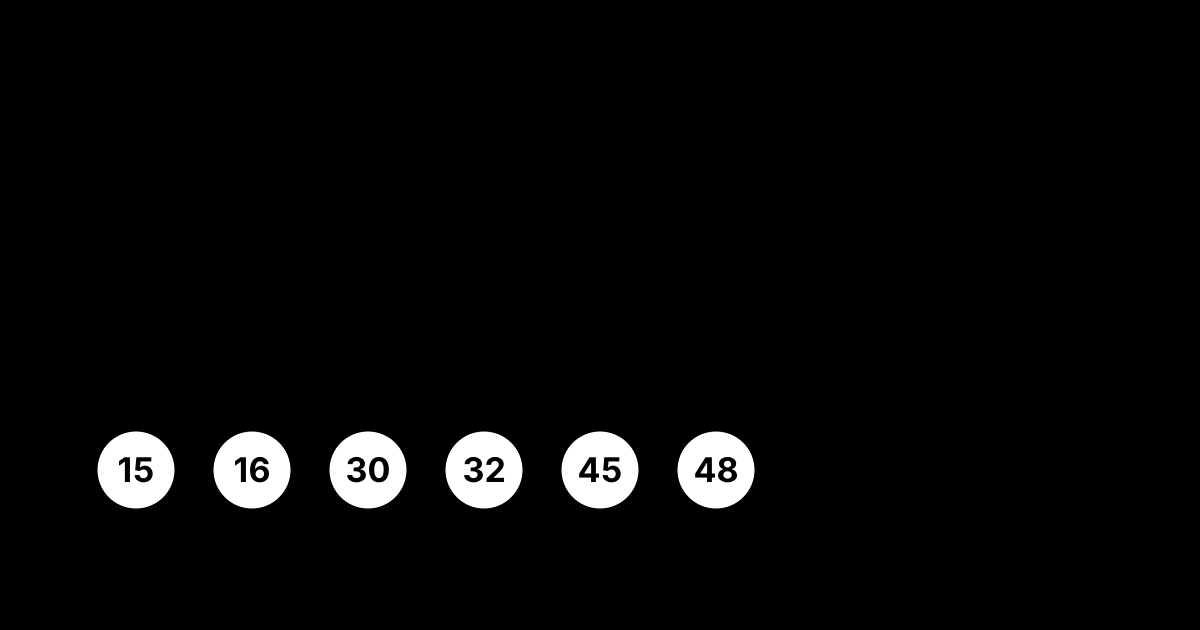
“poop” → P=16, O=15, O=15, P=16
- 16, 15, 32, 30, 48, 45
The repeats collapse to two values, so the rest come from multiplying each.
Among these six, 32 has come up 142 times and 15 has come up 118 times across 1,702 recorded Powerball draws. Every draw is independent, and no number is ever due.
The counts below record actual Powerball draws — a record of the past. Every draw is independent, and no number is ever due.
Numbers from this dream
- 16
- 15
- 32
- 30
- 48
- 45
How often these numbers have been drawn
Counts compiled from actual draw results.
Powerball
Compiled from 1,702 draws up to draw 2090. Counts cover main numbers only; the Powerball is tracked separately.
| Number | Times drawn | Share |
|---|---|---|
| 16 | 133 | |
| 15 | 118 | |
| 32 | 142 | |
| 30 | 126 | |
| 48 | 118 | |
| 45 | 128 |
Latest draw 2090 · September 7, 2026
- 15
- 19
- 28
- 39
- 56
- 3
Common questions
Why is this considered lucky in East Asia?
The association is economic rather than mystical. Before chemical fertiliser, human waste had a market price, so the material genuinely meant money. The dream reading follows the old economics. English has a faint trace of the same logic in the proverb that where there is muck there is brass, and psychoanalysis made the equation explicitly, so the connection is not as foreign as it first looks.
Does it matter whether I was disgusted?
Keep it. If revulsion dominated the dream, that feeling is real information about something in waking life, whichever tradition you prefer. The split worth making is between disgust at the material and disgust at being seen, because the second one is a dream about exposure that happens to use this image.
Should I buy a lottery ticket after this dream?
People do, and in several places it is a recognised custom rather than a private superstition. Treat it as culture, not as a forecast — nothing about a dream changes the odds of a draw.
What if I could not find a toilet, or had no privacy?
That is a separate dream using the same material, and it is extremely widely reported. The content is not the waste but the lack of a door — read it as being unable to attend to something private without an audience. It clusters around shared housing, open-plan offices, early parenthood and any period with no space of your own.
Related dreams
-
 Airplane Dreams — Committed Until It Lands
-
 Book Dreams — Knowledge That Is Not Yours Yet
-
 Car Dreams — Who Is Driving Tells You Everything
-
 Clothes Dreams — Including the One Where You Are Naked
-
 Door Dreams — Open, Locked, or One You Did Not Notice
-
 Hospital Dreams — Admitting You Cannot Handle It Alone