Dreams About Moving House — Packing, Leaving, Arriving
Moving dreams are about identity in transition. What the packing, the empty rooms and the house you cannot leave each signal, plus our letter-rule numbers.
If a house in a dream stands for the self, then moving house stands for the self changing address — which is to say, changing shape.
These dreams show up around transitions that are real but not yet complete. They are among the more useful dreams to pay attention to, because the details are unusually specific about where you are in the process.
Where in the move you were
Packing. The early stage. Deciding what comes with you. If you were agonizing over what to keep, that is the dream’s subject — not the move itself but the sorting.
Boxes everywhere, nothing done. The scale of a change feeling larger than your capacity for it. Very common ahead of decisions that have been made but not started.
An empty house you are leaving. The ending is complete. People frequently report a specific quiet in these dreams.
Arriving somewhere new. The beginning. Whether the new place felt right is the whole reading.
Unable to leave. Something is holding the old shape in place. Worth identifying what.
Moving back into a former home. A pattern returning. Not necessarily regression — sometimes an unfinished thing being addressed properly the second time.
A move you did not choose. Being moved rather than moving. The subject here is control, not transition, and it shows up around decisions taken a level above you — a restructure, a lease ending, a family arrangement settled without your vote.
Something missing when you arrive. A box that never turned up, a room with one thing absent. Usually about a cost of the change that you have not itemised yet. If you knew in the dream what was missing, that is the most specific detail the dream gave you.
The new place turns out to be the old place. Same rooms, same layout, new address. A change that has moved everything except the pattern. Reported after moves, job changes and relationships that repeated their predecessor.
Moving somebody else. Carrying boxes that are not yours. Often about taking responsibility for another person’s transition, and worth asking whether you agreed to it or simply started lifting.
Viewing places rather than moving into one. The stage before the decision. Reads as live options, not as indecision. People report this version during periods when nothing has been committed to and the thinking is real.
Signing something. Paperwork in a moving dream makes the change formal rather than imagined. The dream has moved from wishing to committing, which is a distinction worth catching.
Strangers handling your things. Removal crews, unknown hands in your rooms. A change in which other people are managing what matters to you. Whether that felt like help or like exposure is the whole reading.
What you were bringing
The objects in a moving dream tend to be selective, and the selection means something.
Bringing too much reads as carrying obligations that no longer apply. Leaving something important behind reads as a cost you have already accepted, or one you have not yet noticed. Finding things you forgot you owned reads as capacities resurfacing.
The dream book note
Moving appeared in the American dream book tradition — pocket guides sold from the 1800s into the twentieth century that paired dream symbols with numbers for the street numbers game. We do not reprint their numbers. The books disagreed with one another and none carried real authority, so we publish a rule instead.
What English brings to it
English treats moving as logistics with a feeling attached. Moving on is the phrase for recovering from anything — a job, a bereavement, a relationship — and it borrows the image of changing address to describe changing state, which is exactly the reading above. A fresh start, putting down roots, home is where you hang your hat: the vocabulary assumes mobility is normal and that the self travels intact.
What English does not supply is any sense that the move has to be timed, blessed or announced. There is a housewarming, and it happens afterwards. The decision about when to go is practical — a lease date, a completion date, the end of a school term. Hold that in mind, because all three traditions below treat the when as a real question rather than a scheduling one.
In Korea, Japan and Taiwan
Moving is not just logistics in any of these three — it is scheduled, priced or ritualised.
Korea. You pick the day. SonEomneunNal — literally “days with no spirit around” — are the dates on which the wandering spirits that interfere with household affairs are believed to be absent, and moving is arranged for them. This is not a fringe belief: removal companies charge more on those dates, and the calendar is printed with them. So a Korean moving dream can carry the question of whether the timing was right. The arrival has its own customs too — at a jipdeuri, the housewarming, guests traditionally bring laundry detergent and toilet paper rather than wine, because the bubbles stand for a swelling of fortune and the roll stands for things unspooling smoothly. The gifts are puns, and they are still bought.
Japan. The ritual is the arrival, not the date. Hikkoshi soba — noodles given to new neighbours — worked as a pun on being “beside” them, and while the custom has faded the greeting has not. The hikkoshi aisatsu, the round of introductions with a small gift in hand, is still ordinary practice in apartment buildings, which makes the move a social act performed in public. Japanese rentals also involve reikin, a non-refundable payment to the landlord that buys nothing at all, so moving carries a financial weight with no equivalent in English-speaking markets. A Japanese moving dream can therefore be about the cost of going, not only the fact of it.
Taiwan. The almanac decides, and it decides in detail. The Tongshu lists auspicious days for moving house alongside days for marrying, burying and opening a business, and the chosen day usually comes with a chosen hour as well — the ru zhai, the entering of the house, is supposed to happen inside that window. The stove is often the first thing carried in, since it stands for the household itself, and rice, coins and a lit flame go through the door before the furniture does. Many families make an offering at the new address before sleeping there. So the Taiwanese version of this dream can turn on something the English one cannot even phrase — whether the entry was done properly.
A priced calendar, a bowl of noodles and a round of introductions, a stove carried in at an appointed hour. English has cardboard boxes and a date on a contract.
The numbers
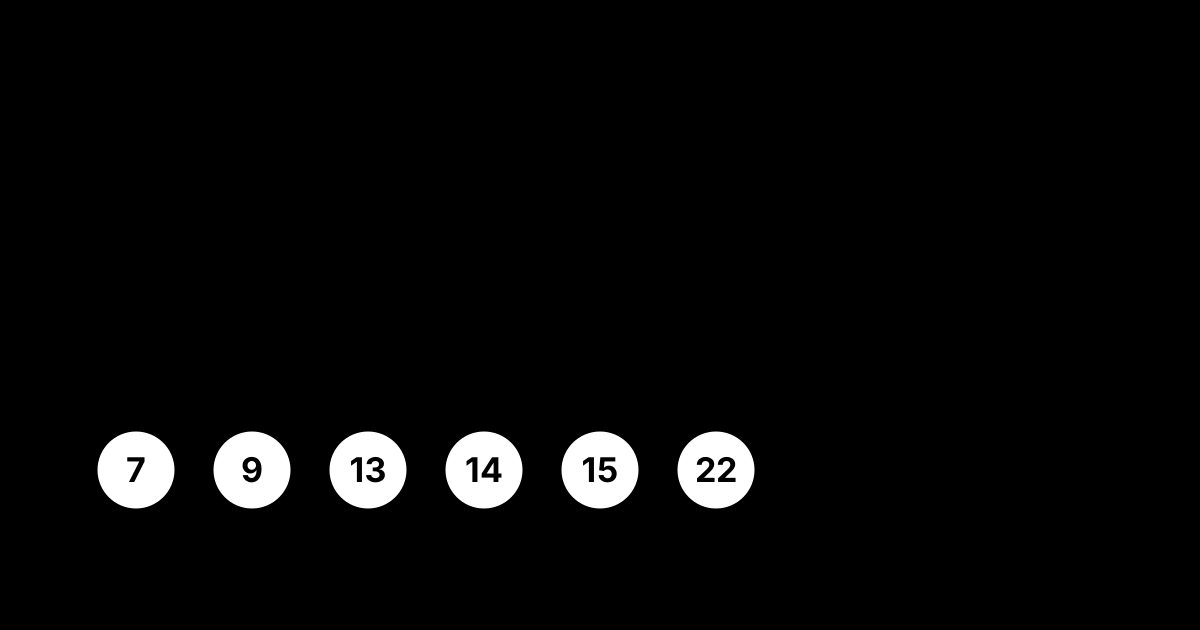
“moving” → M=13, O=15, V=22, I=9, N=14, G=7
- 7, 9, 13, 14, 15, 22
Six distinct letters, so every number here is a letter position with no multiples added.
Among these six, 9 has come up 125 times and 13 has come up 108 times across 1,702 recorded Powerball draws. A record of past draws, not a forecast.
The counts below record actual Powerball draws — a description of the past. Each draw is independent of the last.
Numbers from this dream
- 7
- 9
- 13
- 14
- 15
- 22
How often these numbers have been drawn
Counts compiled from actual draw results.
Powerball
Compiled from 1,702 draws up to draw 2090. Counts cover main numbers only; the Powerball is tracked separately.
| Number | Times drawn | Share |
|---|---|---|
| 7 | 120 | |
| 9 | 125 | |
| 13 | 108 | |
| 14 | 123 | |
| 15 | 118 | |
| 22 | 118 |
Latest draw 2090 · September 7, 2026
- 15
- 19
- 28
- 39
- 56
- 3
Common questions
What does it mean if the packing never finishes?
The most commonly reported version by a distance. The structure — a deadline that will not be met — usually maps onto something current rather than onto the move itself.
I dreamt of moving back into a house I used to live in.
Returning tends to appear when something from that period is unresolved or has come back into play. The house is a container for the time, not for the building.
What if the move was not my decision?
That version separates cleanly from the rest. A move you chose is about sorting, and a move imposed on you is about control, so the two read differently even when the rooms look the same. It is reported around restructures, tenancies ending and family decisions made elsewhere.
Does it matter whether the new place was bigger or smaller?
It is worth noting, but not as simply as bigger being better. A larger place that felt empty and a smaller one that felt right are common versions, and the feeling outranks the floor area.