Fight Dreams — Conflict You Have Not Had Yet
Arguing in a dream, throwing punches, being unable to answer back. Usually a rehearsal rather than a prediction. Plus the numbers, from a stated rule.
Most fight dreams are not about violence. They are about something you have not said.
A rehearsal, not a forecast
Conflict requires proximity. You do not argue with people who are irrelevant to you, and the dream inherits that: a fight dream almost always involves a relationship that is still active in some way.
The English-language reading treats these dreams as stored conflict — an argument that exists but has not happened out loud. That is why the words you said in the dream tend to matter more than who you were fighting. People often articulate a grievance more cleanly asleep than awake.
What the English reading brings to it
English is well supplied with ways of saying that a fight is about position rather than injury — picking a fight, fighting your corner, spoiling for a fight, a fighting chance, standing your ground. The verb does duty for arguing, competing and persisting, and none of those require anyone to be hit.
Depth psychology adds the part that explains why the dream is uncomfortable. Both Freud and Jung treated aggression as ordinary equipment rather than as a defect, with the trouble arriving when it has nowhere to go: Freud’s displacement sends it at a safer target, and Jung’s shadow is where the disowned version of it lives. A dream fight with a stranger fits either account neatly — the force is real, the address is not.
That is also why these dreams so often feel like a relief rather than a nightmare. Something got said.
Who it was with
Someone close. Something unsaid, and usually specific. If you remember what you said, that is the real subject.
A stranger. An internal disagreement rather than an interpersonal one. Two of your own positions competing.
Someone you no longer speak to. That relationship is not finished inside you, whatever its status outside.
Watching a fight without joining. The bystander position. Whether you intervened says something about the role you take in real conflicts.
A boss, a parent, or anyone above you. Rank is the content. The dream is testing whether the thing can be said upward at all, which is a different question from whether it is true.
A child, or someone you are responsible for. Uncomfortable and common. It usually points at a limit you have been avoiding setting rather than at anger.
Nobody identifiable — a fight already in progress. Atmosphere rather than argument. People report it during stretches where the whole environment is adversarial and no single dispute explains it.
How it went
Winning the argument. Straightforward. Some capacity is available to you that you have not used.
Being unable to answer, or unable to speak. Very commonly reported and more informative than the fight itself. It reflects the sense that you have no usable channel.
It turning physical. Not a prediction of violence. It usually means you have concluded that talking will not resolve this.
Making up afterward. A genuinely good sign. The relationship has somewhere to go.
Waking up mid-fight. Unresolved, rendered literally.
Being the one who started it. Worth noting rather than judging. It tends to appear when you have been waiting for a pretext, which is information about how long something has been sitting.
Walking away without finishing it. Not the same as losing. It reads as a decision that the exchange is not worth the cost, and whether you felt settled or cheated on waking tells you which it really was.
An audience. Who was watching changes the dream more than who you fought. Conflict with witnesses is about standing; conflict without them is about the matter itself.
Korea and Japan
Korea. Fight dreams are widely treated as auspicious — ssauneun kkum-eun gilmong is a common saying. Conflict is read as clearing the way for gain, and these dreams get connected to lottery luck in the way that many vivid, unpleasant dreams do in Korean tradition. The social layer matters too: age and rank determine who may say what, and the language forces that choice in every sentence, so a dream in which you argue freely with someone older is its own distinct scene and worth separating from a fight between equals.
Japan. A fight dream is read as evidence that the relationship is still alive. The version that carries more weight is the silent dream — turning away without speaking — which is treated as harder to repair than open conflict. Behind that sits wa, keeping things smooth, and the habit of routing disagreement through indirection and through nemawashi, the groundwork done privately so that nothing has to be fought over in public. A fight dream in Japan can be about the thing that could not be said, which is a different dream from one about anger.
An event that is a good omen in Korea and a sign of an active bond in Japan is, in English, mostly a symptom of suppressed anger. Three readings, one dream.
The Taiwanese layer
In Taiwan the question a fight dream raises is not who was right. It is what the fight costs in front of other people, and then where you take it.
Face is the accounting. Mianzi is the standing you hold publicly, and a public argument spends it on both sides whatever the outcome. That is why the setting of the dream carries so much weight there — an argument with witnesses and the same argument behind a door are not the same event, and the one with witnesses is the expensive one. A dream in which you were humiliated rather than defeated is reading the right register.
There is a court for it. Disputes have traditionally been taken to the City God, whose temples are laid out as a magistrate’s court, complete with the registers in which deeds are recorded. You state your case there. The idea that a quarrel belongs in front of a deity rather than only between the parties is a live one, and it gives a fight dream somewhere to go.
And an oath settles what argument cannot. When two sides could not agree, the old recourse was to swear before a god, the chicken-head oath being the version everyone knows. The point was that a statement made there could not be walked back.
Face spent in public, a case to file, an oath that binds. In English a fight is mostly just a fight.
The numbers
“fight” → F=6, I=9, G=7, H=8, T=20
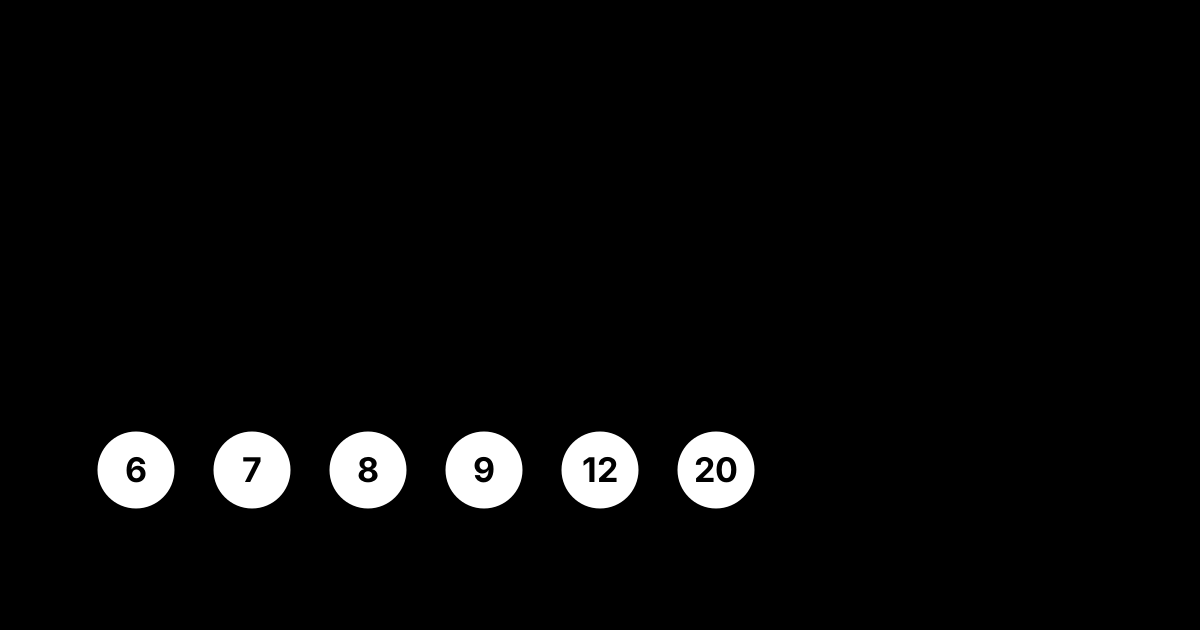
- 6, 9, 7, 8, 20, 12
Five letters, so 12 comes from doubling the first.
Among these six, 6 has come up 132 times and 20 has come up 113 times across 1,702 recorded Powerball draws. Every draw is independent, and no number is ever due.
The counts below record actual Powerball draws — a record of the past. Every draw is independent, and no number is ever due.
Numbers from this dream
- 6
- 9
- 7
- 8
- 20
- 12
How often these numbers have been drawn
Counts compiled from actual draw results.
Powerball
Compiled from 1,702 draws up to draw 2090. Counts cover main numbers only; the Powerball is tracked separately.
| Number | Times drawn | Share |
|---|---|---|
| 6 | 132 | |
| 9 | 125 | |
| 7 | 120 | |
| 8 | 129 | |
| 20 | 113 | |
| 12 | 133 |
Latest draw 2090 · September 7, 2026
- 15
- 19
- 28
- 39
- 56
- 3
Common questions
Does dreaming of fighting someone mean I am angry at them?
Not reliably. Fight dreams tend to be rehearsals for something unresolved rather than reports on a relationship. Who it was with matters, but often as a stand-in rather than as the subject.
What if I could not land a punch?
One of the most reported versions — swinging in slow motion, hitting nothing. It fits situations where you feel you cannot make an impact, and the powerlessness is usually the content rather than the conflict.
Is winning the fight a good sign?
Less than people expect. What tends to carry the meaning is whether the fight ended, not who won. A fight that simply stops is a different dream from one that resolves.
Why do I remember the words so clearly?
Because in most fight dreams the words are the point. People regularly report stating a grievance in a dream more cleanly than they have ever managed out loud, and the sentence tends to survive waking even when the setting does not. Writing it down is worth more than interpreting the rest of the dream, since it is the closest thing you have to the argument you have not made.