Wedding Dreams — Two Things Becoming One
Wedding dreams rarely predict weddings. What marrying a stranger, marrying an ex, and the things that go wrong at the ceremony each mean.
People who dream of getting married usually assume the dream is about wanting to get married. Sometimes it is. More often it is not.
The shape, not the event
Interpretation reads a wedding as two separate things joining into one. That shape is what the dream is using.
The two things are often not people. Work and home life. Two plans that had been running in parallel. Two contradictory positions you have been holding at once. When those merge, this dream shows up — regardless of your relationship status.
Who you married
A stranger, or someone with no clear face. The most common version. The thing being joined has not taken shape yet. Reported frequently just before new jobs and new arrangements.
Someone you know. Not necessarily romantic. More often about what that person represents — a field, a way of living, a part of your history — coming closer.
An ex. Usually about the version of yourself from that period rather than the person. Something you had then that you are trying to get back.
Already married and dreaming of a wedding. The existing relationship changing form. Roles updating rather than anything ending.
When the ceremony goes wrong
This deserves its own section because it is so common: arriving late, no dress, the venue is wrong, the other person does not come.
These are almost never about the relationship. They are preparedness dreams, and they cluster around deadlines and launches. If you are days out from something significant at work, this is likely where it is coming from.
Attending someone else’s wedding. Something is being finalized nearby rather than by you.
More versions worth separating
You were the one who called it off. A decision, not an anxiety. Something was about to become permanent and you stopped it. Reported by people quietly reconsidering a commitment that everyone around them regards as settled.
Nobody in the room was anyone you knew. The joining is happening in a context you have no footing in. Common with moves, new industries and anything where the terms are set by people you have not met.
Watching your own wedding from outside your body. Detachment made literal. Something is being committed to in your name and you are not quite inside the decision.
Marrying someone who has died. Alarming to wake from and rarely about them. It usually reads as a tie you have not finished — something from that period of your life still being carried forward. In Taiwanese folk belief this has a much more specific form, which the section below covers.
A ring that will not fit, or that you lose. The commitment itself refusing to settle, as opposed to the ceremony going wrong around it. Worth separating from the general preparedness dreams.
Being told who to marry. A joining arranged by someone else. People report it about assignments, mergers and partnerships they had no say in.
The ceremony happening and you cannot remember agreeing to it. The version with the most unease. Something has been finalized by accumulation rather than by choice, which is how most long-running arrangements actually get fixed.
The dream book note
Weddings appeared in the American dream books — the pocket guides that from the 1800s onward paired dream symbols with numbers for the street numbers game. We do not reprint those numbers. The books disagreed with each other and none carried real authority, so we publish our rule instead.
In Korea, Japan and Taiwan
The wedding is where “who is marrying whom” is answered differently, and that changes the dream.
Korea. The scale is institutional. Weddings are often held in dedicated wedding halls on a tight schedule, and guests bring cash in a white envelope with the amount recorded in a ledger. That ledger is the point — it records an obligation that will be returned at your own family’s events years later. A wedding dream in Korea can be about the accounts as much as about the couple.
Japan. Two ceremonies coexist. The Shinto rite involves san-san-kudo, three sips from three cups, and the bride’s white shiromuku. The reception that follows is closer to a formal banquet with speeches assigned by rank. Gift money goes in odd-numbered amounts, since even numbers can be divided.
Taiwan. The engagement is a separate event with its own gifts, and the almanac is consulted for the date. Red dominates, and white is avoided entirely — it belongs to funerals.
An account book, two ceremonies, a date from the almanac. English mostly has the vows.
The Taiwanese layer
Taiwan runs a wedding as a sequence of small rites, each with a reason, and that gives the dream more surfaces than the English version has.
The date is not chosen for the venue’s convenience. Families consult the almanac, the tongshu, for an auspicious day and often an hour, so in Taiwan the question of when is answered by the calendar rather than by the couple. The engagement is its own event with its own exchange of gifts, which means the joining happens in two stages and a dream can land on either.
The bride’s departure from her family home carries the most specific customs. A fan is thrown from the car as she leaves, taken to mean leaving her temper and her old self behind; a rice sieve or a black umbrella is held above her so that she is not under open sky on the way; firecrackers mark the moment. Red runs through all of it, and white is kept out entirely because white belongs to funerals.
There is also a folk belief that makes a dream of marrying a stranger read very differently there. A red envelope left on the ground, containing money and sometimes a lock of hair, is said to be an offer of minghun, a marriage to a woman who has died, arranged by a family so she is not unmarried in the next world. Pick it up and you have accepted. It is a ghost story more than a practice, but everybody knows it — so the faceless partner who is the most common version of this dream in English is, in Taiwan, a figure with a story already attached.
The numbers
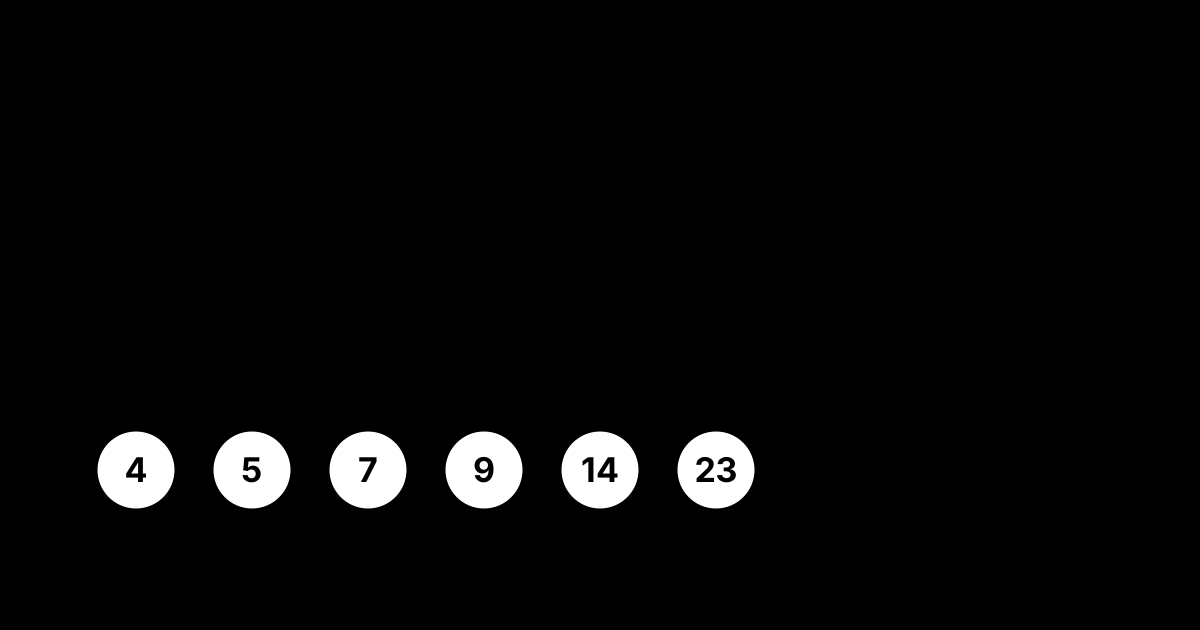
“wedding” → W=23, E=5, D=4, D=4, I=9, N=14, G=7
- 4, 5, 7, 9, 14, 23
The repeated D collapses, leaving six distinct letters — enough that no multiples were needed. Every number here is a letter position.
Among these six, 23 has come up 146 times and 4 has come up 116 times across 1,702 recorded Powerball draws. Every draw is independent, and no number is ever due.
The counts below record how often each has been drawn in Powerball. That is history. It says nothing about the next draw.
Numbers from this dream
- 4
- 5
- 7
- 9
- 14
- 23
How often these numbers have been drawn
Counts compiled from actual draw results.
Powerball
Compiled from 1,702 draws up to draw 2090. Counts cover main numbers only; the Powerball is tracked separately.
| Number | Times drawn | Share |
|---|---|---|
| 4 | 116 | |
| 5 | 118 | |
| 7 | 120 | |
| 9 | 125 | |
| 14 | 123 | |
| 23 | 146 |
Latest draw 2090 · September 7, 2026
- 15
- 19
- 28
- 39
- 56
- 3
Common questions
Does dreaming of a wedding mean I will get married?
Rarely. The wedding is a shape — a public commitment with witnesses — and the dream tends to be about committing to something rather than to someone. Who you married usually matters more than the ceremony.
What if the ceremony went wrong?
One of the most reported versions and not a warning. Lost rings, missing guests and wrong clothes fit the general anxiety-dream pattern rather than pointing at the relationship.
I dreamt of marrying someone I barely know.
Common, and usually about what that person represents rather than about them. Their role — a colleague, a stranger, someone from long ago — is the more useful detail.
What does it mean if I called the wedding off in the dream?
It reads as a decision rather than as a fear, which makes it one of the more straightforward versions. Something was close to becoming permanent and you declined. People report it while reconsidering a commitment that everyone around them already treats as settled.