Flying Dreams — Height, Control, and What They Track
One of the few dreams people are glad to have had. How the altitude and your degree of control change the reading, plus the numbers our letter rule produces.
Flying is one of the very few dreams people wake from in a better mood than they went to sleep in. That alone makes it worth paying attention to.
What it tracks
Flight is release from a constraint — the ground, in the dream’s own terms. Interpretation reads it as either wanting out of the current frame or already getting out of it.
These dreams cluster around transitions. New work, a move, the end of an arrangement that had gone on too long. Sometimes they arrive slightly before the person has consciously decided anything, which is part of why they are worth noting rather than just enjoying.
Altitude and control
Flying easily, going where you intend. The strongest version. Judgment feels clear and capability matches ambition. If the view was wide and detailed, that reads as visibility about what comes next.
Skimming low, just above the ground. You are moving, but the constraint is still close. Ambition and circumstances have not finished negotiating. Progress is real; it is just partial.
Struggling to stay up, dropping. Intent has outrun preparation. Not a warning against the direction, only a note about the fuel.
Too high, and frightened by it. Release turning into exposure. Common shortly after a fast change, when the new altitude has not become normal yet.
Flying with someone. Alignment. You and that person are pointed the same way.
Having to work at it — flapping, swimming through the air, pushing off repeatedly. Extremely common, and worth separating from effortless flight. The capability is real but conditional. Something is working because you keep feeding it.
Unable to take off at all. You ran, you jumped, nothing happened. This is closer to a car that will not start than to a fall. An intention exists and has not been converted into movement yet.
Flying indoors, or under a low ceiling. Release inside a container. The constraint has moved from the ground to the walls — often read as a change that happened within the same structure rather than out of it.
Being watched while you fly. Visibility. Someone noticing a change you have made, with the dream’s tone telling you how you feel about being noticed.
Landing on purpose, and well. The quietly best version. Release that you can also end. Interpretation reads a chosen landing as integration rather than as the dream being over.
Falling after flying. Read the hinge, not the fall. What changed at the moment it stopped working is the part of the dream carrying the information.
Where you were flying over
A city or somewhere familiar. Your position within an existing structure is shifting.
Ocean, mountains, open country. A larger change of environment.
Somewhere you have never been. Anticipation mixed with unease about what has not arrived yet.
What the English-language tradition brings
English has two inherited stories about flight and they point in opposite directions, which is useful.
The first is Icarus, who flew with wings that worked until he went too high. That is the cautionary half, and it is where the phrase flying too close to the sun comes from. The second is the plain approval buried in everyday English — flying high, walking on air, on top of the world, things are taking off. The language treats altitude as success more often than as hubris.
Psychoanalysis split along a similar line. Freud, working through the dreams of flight people reported to him, connected them back to the physical sensations of childhood play — being lifted, swung, thrown and caught — and read the adult dream as that remembered bodily pleasure returning. Jung read it as perspective instead, the psyche climbing high enough to see the whole arrangement of a life at once. Those two readings are not in competition. One explains why the dream feels the way it does; the other explains why it tends to arrive when it does.
Sleep research adds a third, non-symbolic angle. Flying is the most frequently reported trigger for noticing that you are dreaming, which makes it the usual doorway into lucid dreaming. Many people’s first lucid moment arrives mid-flight, with the thought that this is not something they can normally do.
Korea and Japan read the destination
Korea. Flying is straightforwardly favourable, and it can be read as a taemong — a conception dream, the category of dreams understood to announce a pregnancy and hint at the child’s character. English has no equivalent category at all. A bird or a dragon in the air raises the reading further, and the direction matters more than the altitude. Rising toward something is read differently from rising away from something.
Japan. The emphasis also lands on where you were headed rather than how high you got. Japanese dream reading treats effortless flight as a sign that circumstances have loosened, and a sky that was bright or wide as the better version of the image. The detail a Japanese reading would ask for first is what the weather was doing, which is rarely the first question an English reading asks.
The Taiwanese layer
In Taiwan the dream is less likely to be read as psychology and more likely to be read as status.
The manual. Zhougong Jiemeng, the dream dictionary attributed to the Duke of Zhou, is still printed, still sold and still consulted. Its logic is predictive rather than psychological — a dream is an indication about what is coming, not a report on your interior. Rising and flying sit among its more favourable entries, read as ascent in position.
The idiom. Everyday Mandarin carries the same association. Feihuang tengda describes a career rising fast, and yibu dengtian — reaching the sky in a single step — describes the sudden version of it, usually with a note of suspicion attached. Flight in Chinese is about rank far more than it is about freedom.
The immortals. Daoist tradition has people who achieve flight permanently. The xian, the immortals, ride wind and cloud, and ascending is the literal shape of transcendence in that system. So a flying dream in Taiwan can brush against something closer to religious imagery than to Icarus.
The confirmation. This is the part with no English counterpart. A dream that seems to mean something is a reason to go to a temple and ask. You throw jiaobei, the pair of curved moon blocks, for a yes or no, or draw a qiuqian fortune stick and have the matching slip read for you. The dream is treated as a question worth taking somewhere, rather than as something you settle by yourself.
A promotion, an immortal, and a temple visit. English mostly has a boy with wax wings.
The dream book link
For roughly a century, American dream books — sold cheaply on street corners and in shops — listed dreams next to numbers so people could play them in the numbers game that operated in cities before legal lotteries. Flying was in there. So was everything else.
We do not reproduce those numbers. The various books contradicted each other freely, and choosing one to present as correct would mean fabricating an authority nobody ever had. We state a rule and stick to it.
The numbers
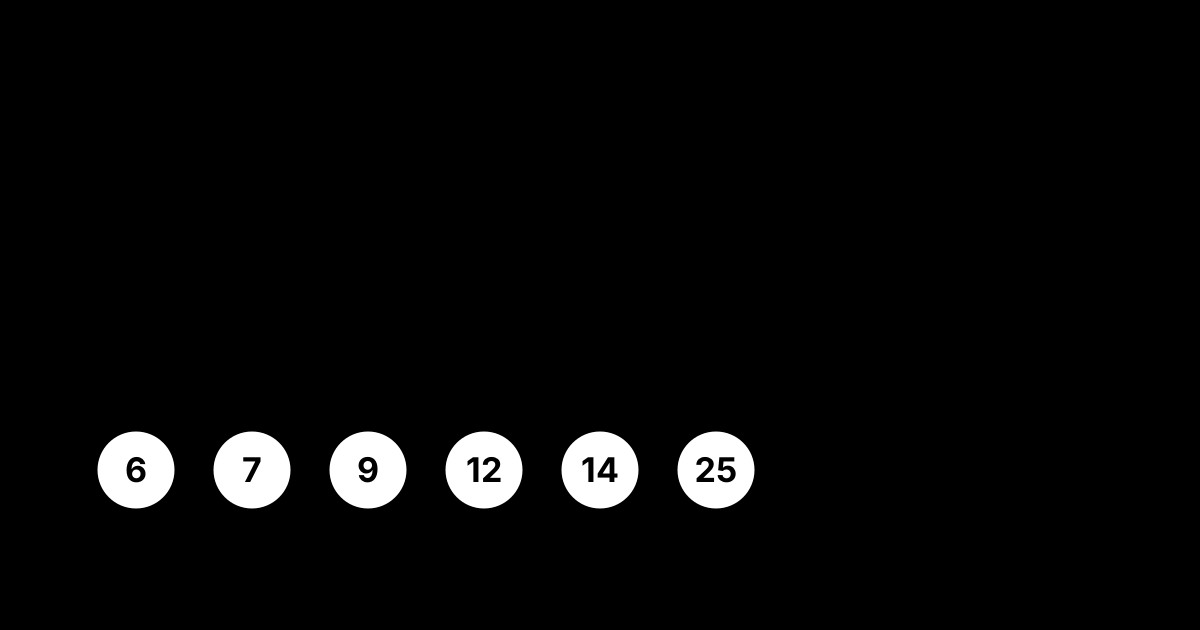
Each letter becomes its alphabet position. Repeats collapse; multiples fill any gap.
“flying” → F=6, L=12, Y=25, I=9, N=14, G=7
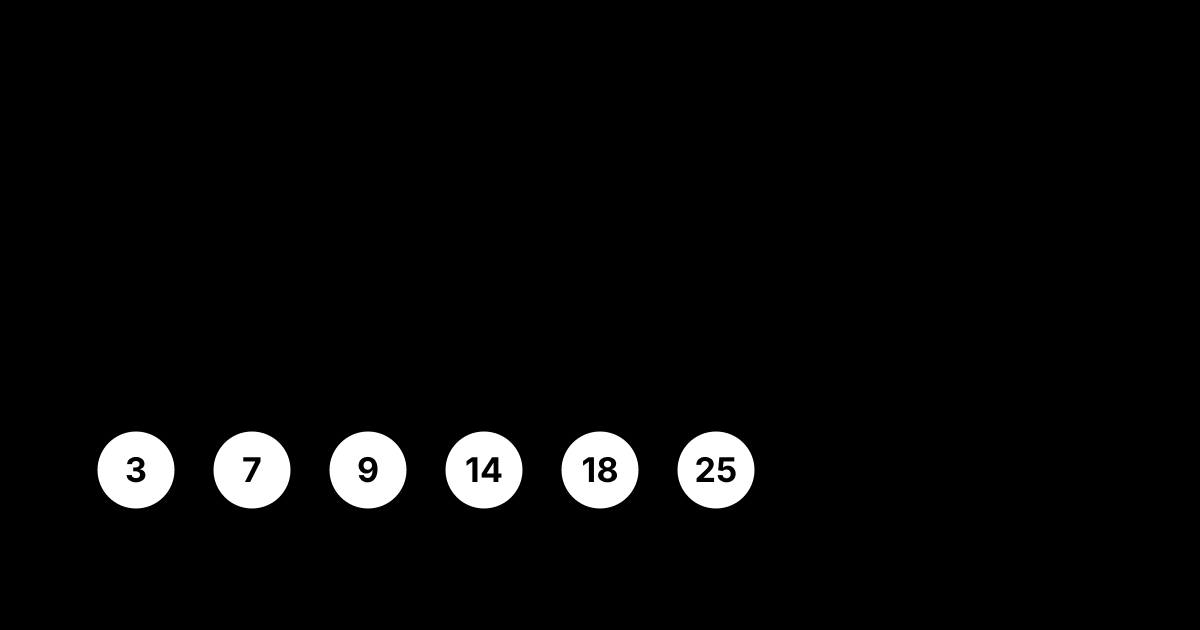
- 6, 7, 9, 12, 14, 25
Six distinct letters, six numbers, nothing added. You can check every one of them against the alphabet.
Among these six, 12 has come up 133 times across 1,702 recorded Powerball draws in our data and 7 has come up 120 times. Every draw is independent.
The counts below record how often each has actually been drawn in Powerball. That is history. Each draw is independent of the last, and no amount of past appearances makes a number more likely next time.
Numbers from this dream
- 6
- 7
- 9
- 12
- 14
- 25
How often these numbers have been drawn
Counts compiled from actual draw results.
Powerball
Compiled from 1,702 draws up to draw 2090. Counts cover main numbers only; the Powerball is tracked separately.
| Number | Times drawn | Share |
|---|---|---|
| 6 | 132 | |
| 7 | 120 | |
| 9 | 125 | |
| 12 | 133 | |
| 14 | 123 | |
| 25 | 122 |
Latest draw 2090 · September 7, 2026
- 15
- 19
- 28
- 39
- 56
- 3
Common questions
What are the two things to look at in a flying dream?
Height and control. Height indicates the scale of what you are dealing with; control indicates whether it is in your hands. Almost every variation of this dream can be read from that pair, which is why it is worth recalling those two details before anything else.
Why do flying dreams feel so good?
Because in most of them you are both elevated and in charge, which is an unusual combination in dreams. They are also the most commonly reported entry point into lucid dreaming — many people first realize they are dreaming while flying, which is why sleep research pays more attention to this dream than fortune-telling does.
Is it a good sign in other traditions?
Korean interpretation treats flying dreams as favourable and sometimes as a conception dream, especially with a bird or a dragon present — a category English has no equivalent for. Japanese readings focus on freedom and on where you were heading rather than on how high you went.
What if I kept having to work at it to stay up?
Effortful flight is one of the most commonly reported versions and it is not a failed version of the dream. Flapping, swimming through the air, pushing off the ground repeatedly — all of it reads as capability that exists but has to be maintained rather than capability that carries you. Ask what in your life currently runs only as long as you keep pushing.