Exam Dreams — Why You Still Have Them Decades Later
The test you did not study for, the room you cannot find, the course you forgot you enrolled in. Exam dreams are about evaluation, not school.
People who left school twenty years ago still have this dream. That fact alone tells you it is not about school.
The first place you were graded
An exam is, for most people, the first experience of being formally evaluated. You prepare, the preparation is converted into a number, and the number is compared to other people’s.
Once that template exists, the mind reuses it. Performance reviews, interviews, presentations, scrutiny of any kind — the feeling gets filed under the old format and comes back wearing a school uniform.
Exam dreams are evaluation dreams.
Version by version
Not knowing the answers. The most common. Read as feeling underprepared. Sometimes that is accurate; more often it reflects a harsher self-assessment than the situation warrants.
Arriving late, or unable to find the room. Time pressure. Check your actual calendar before interpreting anything.
A blank paper, or text you cannot read. Not knowing what is being asked of you. This one clusters around work with unclear standards.
Discovering you never attended the course. A widely reported variant. Something was left incomplete and you moved on anyway.
Doing well. Read straightforwardly. Notably rare, which is itself worth thinking about.
The exam ending. Passing out of an evaluation period. Read positively.
Cheating, or being watched for cheating. Two different dreams wearing the same costume. Cheating points at a sense that your position was reached by a route you would rather not describe out loud — impostor feeling in its most literal staging. Being suspected while you did nothing is the other dream entirely, and it is about being judged by somebody who has already decided.
An exam in a subject you never took. Narrower than discovering you never attended the course. Here you are being measured against a standard that was never explained to you, which is what a good deal of adult assessment actually feels like.
Sitting it with the wrong people. Colleagues in your old classroom, or school friends in your current office. The mind is splicing two evaluation periods together, usually because the new one has started to feel like the old one.
Being your present age in your old school. Very commonly reported, and the mismatch is the message. You are being held to a standard you outgrew a long time ago.
Running out of time while knowing the answers. A different dream from not knowing them, and people conflate the two. This is competence with no room to show itself — the complaint of somebody overloaded rather than underprepared.
Watching someone else sit it. You have handed the evaluation to another person, or you have become the one holding the standard. Parents, teachers and managers report this version more than anyone else.
The result rather than the exam. A grade, a posted list, an envelope. The dream has skipped past performance and gone to verdict, which usually tracks a real stretch of waiting for news.
What to do with it
Use it as a checklist rather than as evidence against yourself. Three questions usually settle it: who is currently evaluating you, whether their standard is actually clear, and whether you are genuinely underprepared or just anxious. Naming those tends to reduce how often the dream returns.
The oldest noted dream of all
Exam dreams are old enough to appear in the first serious book written about dreaming. Freud singled them out and noticed something odd: people dream of examinations they have already passed, frequently from decades earlier. He read that as a form of consolation — the mind retrieving an ordeal that was survived in order to steady you before one that has not happened yet.
You do not have to accept the mechanism to find the observation useful, because it holds up on its own. The dream reliably chooses an exam that is finished. If the point were to frighten you, there is better material available.
A Jungian reading arrives in the same place by another road. Tests and ordeals are the standard furniture of initiation stories, and initiation imagery turns up when somebody is moving between roles rather than sitting inside one. Both readings agree on the part that matters — this is a dream about a transition, not about a school.
How English talks about being judged
The vocabulary gives the game away. We make the grade, pass with flying colours, fail the test, get a pass — and we use the same words for situations containing no exam at all. A marriage passes a test. An excuse does not make the grade. English treats examination as the general model for being judged, so when the mind needs a picture of judgement it already has one filed and ready.
That is also why English-language interpretation puts this dream under anxiety dreams rather than under omens. It is grouped with the other three recurring staples — falling, being chased, being unprepared in public — and read as a symptom of a situation rather than as a message about one.
The same exam in Korea and Japan
Korea. The dream is heavier there, because the exam is. The national university entrance test takes up a single day that the whole country reorganises around — office hours shift, noisy work stops, and aircraft are held on the ground during the English listening section. Families send yeot, a sticky toffee, so that the answers stick; a fork may be given so the right answer can be picked out; seaweed soup is avoided on the day because it is slippery, and so is failing. With that much ritual attached, an exam dream there is discussed as a concrete omen rather than as a mood.
Japan. The season has its own name, juken, and its own patron. Sugawara no Michizane, a scholar ruined by court politics and afterwards worshipped as Tenjin, has shrines where students hang wooden plaques with a target school written on them. Even the shops join in — the chocolate bar whose name sounds like kitto katsu, surely win, is bought by the box in January. A Japanese exam dream sits inside a system that has a calendar.
The Taiwanese layer
Taiwan carries the longest institutional memory of examinations anywhere, because this is where the idea comes from. The imperial civil service examination, the keju, ran for well over a thousand years across the Chinese world and decided who held office. Passing was not a credential, it was a change of class, and the top graduate had a title of his own. That history is why the language of testing still carries so much weight in the region.
There is a god for it. Wenchang Dijun, the deity of literature and examinations, has temples that fill up as the exam season approaches, and the visitors are as often parents as students.
The offerings are puns. Students bring spring onion, celery and radish, because those words sound like clever, diligent and a good start. Families eat zongzi, wrapped rice dumplings, because the phrase for wrapping one sounds like the phrase for passing. The ritual runs on homophones, which is a very Taiwanese way of taking something seriously.
You can ask instead of hoping. The question can be put directly. Crescent jiaobei blocks are thrown on the temple floor for a yes or no, and numbered qiuqian lots give back a verse to interpret. A Taiwanese reader who dreams of an exam has a procedure available for the uncertainty, which is precisely what the English anxiety-dream reading does not offer.
A toffee that sticks, a plaque on a shrine wall, a dumpling that is also a pun. English has a feeling and a category to file it under.
Dream books and numbers
Exams entered the American dream books relatively late, as formal schooling spread. Those books — sold from the 1800s onward — paired dream symbols with numbers for the street numbers game. We do not reprint their numbers; editions contradicted one another and none held authority.
The numbers
“exam” → E=5, X=24, A=1, M=13
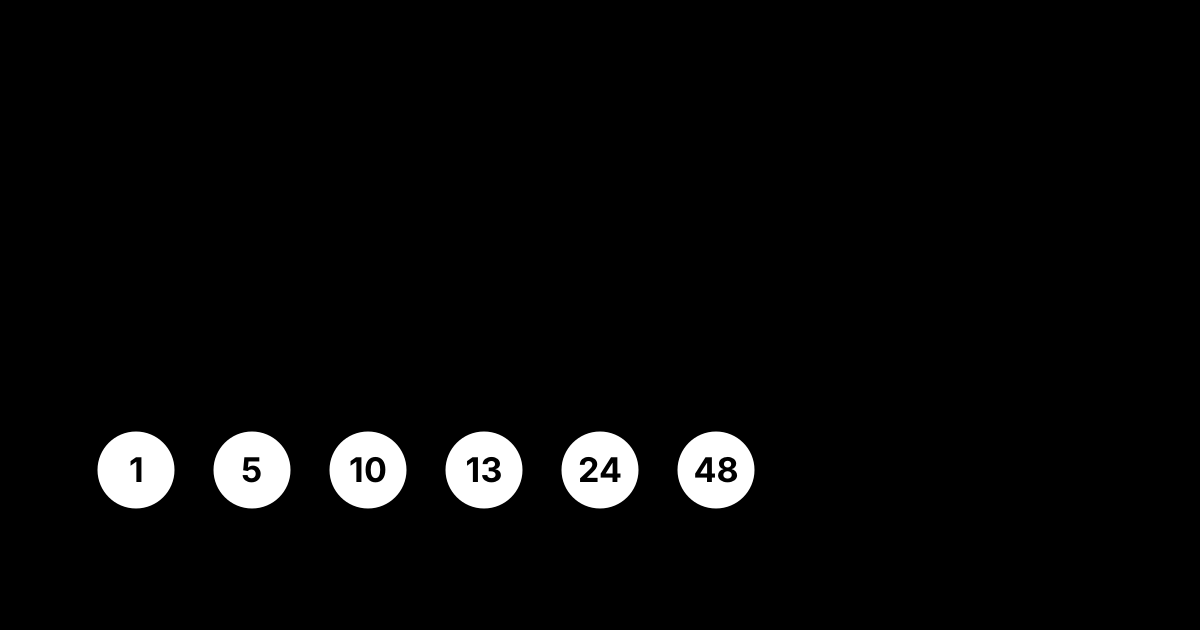
- 1, 5, 10, 13, 24, 48
Four letters, plus 10 and 48 from doubling 5 and 24. Note that 48 is well above 26 — the multiples are what let short words reach the upper half of the Powerball range.
Among these six, 24 has come up 127 times across 1,702 recorded Powerball draws in our data and 13 has come up 108 times. The past does not lean on the future.
The counts below are historical draw records. They describe the past and predict nothing.
Numbers from this dream
- 1
- 5
- 10
- 13
- 24
- 48
How often these numbers have been drawn
Counts compiled from actual draw results.
Powerball
Compiled from 1,702 draws up to draw 2090. Counts cover main numbers only; the Powerball is tracked separately.
| Number | Times drawn | Share |
|---|---|---|
| 1 | 116 | |
| 5 | 118 | |
| 10 | 124 | |
| 13 | 108 | |
| 24 | 127 | |
| 48 | 118 |
Latest draw 2090 · September 7, 2026
- 15
- 19
- 28
- 39
- 56
- 3
Common questions
Why do I still have exam dreams decades after school?
Because the dream is not about school. An exam is simply the most rehearsed image of being assessed within a fixed time by someone else — and adult life supplies plenty of those. Having this dream while nowhere near an exam is the normal case, not the strange one.
What does it mean if I had not studied?
The most common version by far. It reflects a sense of being unprepared, which frequently does not match actual preparedness. Read it as the feeling rather than as an audit.
Does it mean the same thing everywhere?
No. In Korea the weight is heavier — the national university entrance exam is a day the whole country reorganizes around, so exam dreams there are discussed as concrete omens about passing or failing. In English they are classed as anxiety dreams and treated as a symptom rather than a sign.
Is there a version of this dream that reads well?
Two of them. Doing well is read straightforwardly, and the exam ending — walking out, the room emptying behind you — reads as coming out of a period of being assessed rather than as a result. Both are reported far less often than the unprepared version, which is itself the interesting part.