Couple Dreams — Watching a Partnership From Outside
Dreaming of a married couple, an argument, a couple you do not know. The one family bond built entirely from choice. Plus the numbers, from a stated rule.
A couple is the one family relationship with no blood in it. Everything else you are born into. This one gets built.
Maintained, not inherited
Parents and siblings persist whether or not anyone tends to them. A partnership does not. It is held together by continued effort, and it changes shape when that effort stops.
That is what the dream is usually about: something you have to keep choosing. A business partnership, a long friendship, a working relationship that only survives if both sides keep showing up. People without partners have these dreams regularly, and the reading holds.
What the couple was doing
Getting along. Some part of your life is in balance. An unremarkable reading, and often the correct one.
Arguing. The most common version. Worth knowing that arguing in a dream is not the bad sign people assume — a couple who are still fighting are still engaged. The dream that indicates more trouble is the silent one.
Not speaking to each other. Something has gone underground. Harder to resolve than open conflict because nothing has been named.
Separating or divorcing. Alarming, and rarely predictive. Read it as a relationship changing shape. These dreams cluster around periods when distance is being renegotiated, not ended.
A couple you do not recognize. You are watching a partnership from outside. Whatever you felt about them — envy, relief, boredom — is the actual content.
Your parents as a couple. A separate case. This tends to surface your template for what a partnership is supposed to look like.
An elderly couple. Duration rather than compatibility. The dream has moved the question from whether an arrangement is pleasant to whether it can be kept up for decades, which is a different and harder thing to answer.
One of them absent, or leaving the room. The pair is still described as a pair and only one is present. Reads as an arrangement being carried by one side, and the dream is usually clear about which.
A wedding rather than a marriage. The ceremony is a public declaration, so this version brings other people’s opinions into it. Who was watching matters more than who was marrying.
Being asked to take sides. You have been placed inside somebody else’s partnership. Reported by friends, children and colleagues of people in difficulty, and the dream tends to be about the cost of being the referee.
A couple you knew who have since separated. A specific and uncomfortable version. It usually means a template has been revised, and the dream is doing the revising.
You and a stranger presented as a couple. Nobody in the dream questions it. Read it as a role you are already occupying with someone — a working partnership, a shared obligation — rather than as a romantic prediction.
A couple with a child. The arrangement has acquired a third party who depends on it. The reading shifts from choice toward responsibility, and it holds for projects as readily as for families.
Being mistaken for one half of a couple. Other people’s assumptions about where you belong. Mildly embarrassing in the dream and usually about a reputation rather than a relationship.
Where the English-language reading comes from
Couple in English does not require marriage. Two people living together, dating, or in a civil partnership all fall under the same word. That looseness shapes the dream reading: the question is usually compatibility rather than institution.
There is no equivalent of a family-to-family arrangement embedded in the term, and dream interpretations follow — they ask whether the pairing suits the people in it.
The idioms carry the same argument and cannot agree with each other. A spouse is your better half or your other half, which assumes incompleteness; a partner in crime assumes conspiracy; a soulmate assumes destiny; the old ball and chain assumes confinement. People tie the knot, and then promise for better or for worse — a vow whose whole point is that the arrangement will have bad stretches and is supposed to survive them.
English literature has spent centuries on the same question. The marriage plot ends at the wedding because the interesting part was the choosing, which tells you where the culture puts its attention. Compatibility is the English subject, and the dream reading inherits it.
The analytic layer adds one useful idea. Jung used the image of a joined pair — the coniunctio — for the union of opposites inside a single person, which means a dreamed couple need not be two people at all. It can be two halves of one situation that have to keep working together. That reading explains why people with no partner have this dream so regularly, and why it fits business partnerships and long friendships without any strain.
In Korea, Japan and Taiwan
Whether a married couple even shares a name differs, and it changes what the dream is about.
Japan. Married couples must share a surname by law, and in practice almost all take the husband’s. The name change is described as the moment the marriage becomes real, and the requirement is under active legal challenge. A couple dream in Japan can carry a sense of one identity being absorbed into the other in a way English does not supply.
Korea. Surnames never change. A wife keeps her own for life, which comes from the importance placed on bloodline — she is part of the household but carries a different name. Address shifts instead: people are often called “so-and-so’s mother”, so the role replaces the name rather than the surname doing it. The dream widens accordingly. Marriage has long been treated as a link between households rather than between two individuals, so in-laws and relatives turn up in a Korean couple dream as a matter of course, and the interpretation takes them in rather than setting them aside.
Taiwan. Names stay too, and the couple is treated as a link between two families. There is a fixed day in the lunar new year for the wife to return to her parents’ home.
The Taiwanese layer
In Taiwan a couple is a joint between two households, and the joint is marked in writing, in food and in the calendar.
The sign is a doubled word. Weddings are decorated with the shuangxi figure — the character for joy written twice, side by side. Not two people becoming one, but one happiness repeated. Dragon and phoenix appear as the paired motif on invitations and cakes. The iconography is a pair held together, never a merger, which is the opposite of the Japanese single-surname logic next door.
The families negotiate first. Engagement has its own ceremony before the wedding does, with gifts exchanged between the two households and, traditionally, a matchmaker to carry the arrangements. The bride serves tea to her husband’s elders, and the banquet is the point at which the arrangement becomes public. A couple dream in Taiwan can quite reasonably be a dream about relatives.
The calendar records which family you now belong to. On the second day of the lunar new year a married daughter returns to her parents’ home, which exists as a custom precisely because the rest of the year she is counted with her husband’s household. At Qingming, grave-sweeping has traditionally followed the same line of descent. Where you sweep tells you whose family you are in — and that is a far more concrete question than compatibility.
English-speaking countries treat the name as an individual choice and argue about it openly. Better half, partner in crime — the vocabulary emphasises equality, and the households are nobody else’s business.
An absorbed name, a kept name with a replaced form of address, a doubled character on a wedding wall. English has two individuals deciding whether they suit each other.
The numbers
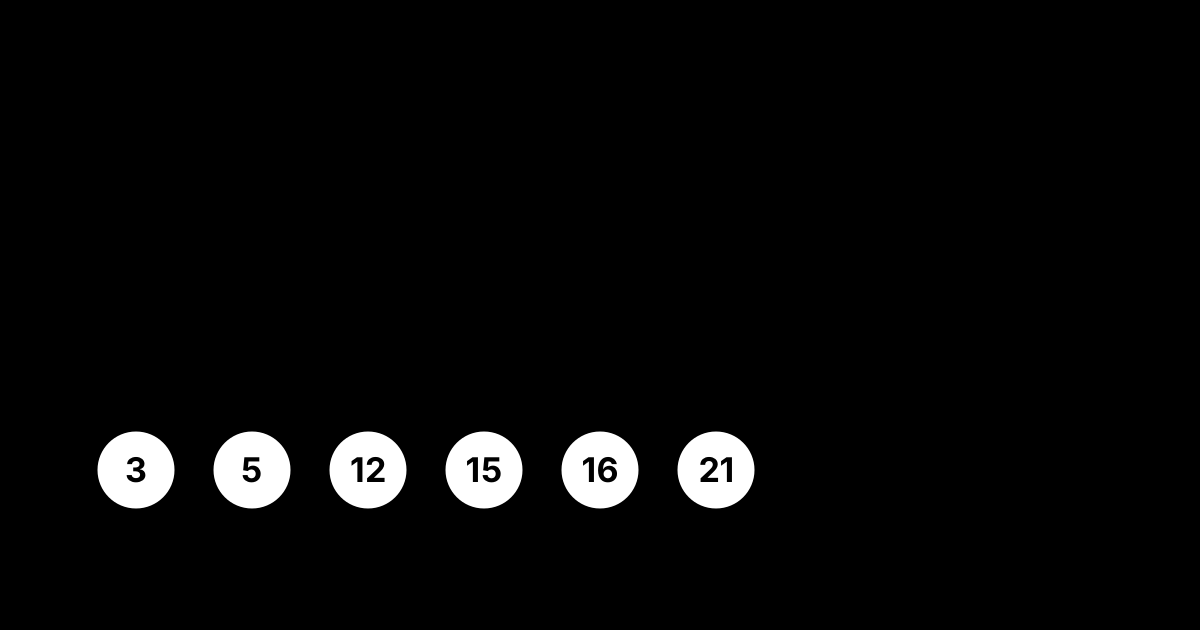
“couple” → C=3, O=15, U=21, P=16, L=12, E=5
- 3, 15, 21, 16, 12, 5
Six distinct letters, so the word fills the set on its own.
Among these six, 21 has come up 144 times and 15 has come up 118 times across 1,702 recorded Powerball draws. A record of past draws, not a forecast.
The counts below record actual Powerball draws — a record of the past. Every draw is independent, and no number is ever due.
Numbers from this dream
- 3
- 15
- 21
- 16
- 12
- 5
How often these numbers have been drawn
Counts compiled from actual draw results.
Powerball
Compiled from 1,702 draws up to draw 2090. Counts cover main numbers only; the Powerball is tracked separately.
| Number | Times drawn | Share |
|---|---|---|
| 3 | 138 | |
| 15 | 118 | |
| 21 | 144 | |
| 16 | 133 | |
| 12 | 133 | |
| 5 | 118 |
Latest draw 2090 · September 7, 2026
- 15
- 19
- 28
- 39
- 56
- 3
Common questions
Does dreaming of a couple say something about my own relationship?
Sometimes, but often the couple is a shape rather than a comparison — a relationship that keeps going. How you felt watching them is usually the more reliable detail than who they were.
What if it was a couple arguing?
Long relationships accumulate things that go unsaid, and the dream tends to route those rather than report a conflict. If it was your own relationship, look at what you have not said rather than at what they did.
I dreamt of a couple I do not know.
Common. Unknown couples usually stand for the arrangement itself. Envy, discomfort and indifference are three different readings of the same scene.
What does it mean to dream of an elderly couple?
Duration rather than compatibility. A pairing that has obviously lasted reads as the long version of the question, so these dreams tend to arrive when somebody is weighing whether an arrangement can be sustained for years rather than whether it is pleasant now. Whether they were still talking to each other is the detail to recover.
Related dreams
-
 Dreams of Dead Relatives — A Visit, or a Haunting?
-
 Dreams About Babies — New Things, Not Necessarily Children
-
 Celebrity Dreams — The Role, Not the Person
-
 Deity Dreams — Being Addressed by Something Larger
-
 Dreams About Friends — Usually About Who You Were Then
-
 Ghost Dreams — What Has Not Been Put Down