Blood in Dreams — Vitality as Often as Injury
Blood is frightening to wake from and is not read as harm by default. What bleeding, seeing blood and stopping it each signal, plus our letter-rule numbers.
Blood dreams wake people up properly. It is worth saying early that interpretation does not treat blood as a warning by default.
Two meanings at once
Blood is what leaks out when something is wrong. It is also what keeps you alive. Both readings are live in dream interpretation, and which one applies depends on the situation rather than on the substance.
That double meaning is not modern invention. Blood has stood for kinship, for life force, and for sacrifice across most traditions — “blood relative,” “lifeblood,” “new blood.” The word carries vitality more often than it carries injury.
What English does with the word
The idioms are worth laying out, because they are most of what an English-speaking reader brings to the dream before any interpretation starts. Bad blood, blood money, bloodbath, in cold blood, out for blood — the hostile set is long. The other set is almost entirely about belonging: blood relative, blood brother, blood is thicker than water, new blood, lifeblood.
So English splits blood into violence and lineage, with very little in between. That gap is why an English-language dream dictionary tends to read a blood dream as alarming while Korean tradition reads the same image as gain.
Depth psychology sits closer to the second set than the first. Jung treated blood as the straightforward image of life energy, and sacrifice as the act of spending some of it on purpose — which puts the question not at is this bad but at what is being spent, and on what.
Situation by situation
Bleeding without pain. The most common version. Read as energy leaving — you are giving something out, often more than you have registered. Where the bleeding was is worth remembering.
Bleeding with pain. A specific injury. Interpretation looks for a specific event rather than a general state.
Seeing blood but not bleeding. Awareness of cost — someone else’s, or a situation’s.
Stopping the bleeding. Taking action to conserve. Read as competence rather than crisis.
A great deal of blood. Intensity, not necessarily severity. Dream volume exaggerates.
Blood on your hands. Responsibility for a consequence. Worth distinguishing guilt from accountability — the dream does not make that distinction for you.
Someone else’s blood. The reading moves off you entirely. It tends to appear when a person nearby is carrying something expensive and has not said so out loud.
Bleeding that will not stop. A drain with no valve on it. Usually points at a commitment that keeps taking without any agreed endpoint, rather than at a single event.
Blood on clothes or bedding. A trace rather than the event. Something already happened and the evidence is still around, which reads closer to aftermath than to crisis.
Giving blood deliberately. A cost you chose. One of the few versions that reads as contribution rather than loss, and the dream usually keeps the voluntary part vivid.
Cleaning it up. Recovery work. Cleanup dreams are generally read as the far side of something rather than the middle of it.
Bright red against dark and dried. Freshness. Bright reads as a live matter, dark as an old one surfacing — the same distinction you would make looking at a stain while awake.
The body part
Hands for work and what you make. Face for how you are seen. The chest for the emotional center. The mouth for something said, or something you swallowed instead. The feet for the road you are on and how far you have walked it. A wound you cannot locate reads as unease without an identified source, which is extremely common.
Korea and Japan read it the other way
Korea. Blood belongs to a whole category of sharp physical dream events — bitten, stung, cut, bleeding — that are read as gain. The reasoning is consistent rather than arbitrary: something definite has happened in a place where nothing was happening, and a definite event is where fortune can attach. A pi kkum gets connected to money in Korean tradition in the way vivid unpleasant dreams generally do there.
Japan. Interpretation splits the symbol. A large quantity of blood is read as something pent-up finally being let out, and so as release. The kinship line is strong too — ketsuen, blood relation, carries real social weight — so a family member bleeding in a dream tends to be read as a matter inside the family rather than a matter inside a body.
Violence in English, gain in Korea, release in Japan. Same image, three starting assumptions.
The Taiwanese layer
In Taiwan the striking thing is that blood is a form of proof.
At temple festivals it demonstrates presence. A spirit medium — jitong, or tangki in Taiwanese — enters trance on behalf of a deity and may be cut or pierced during a procession without appearing to register it. The blood is what the crowd reads as evidence that the god, and not the man, is in charge of the body. Nowhere in the English tradition does blood function as testimony.
It seals a promise. The old way of making an oath binding was to swear it in front of a deity with a blood offering, the chicken-head oath being the version everyone knows from films and from clan disputes. Words could be denied later; blood was the part that could not be taken back.
It defines the line you belong to. Xueyuan, blood relation, organises ancestral halls and surname associations, and a surname is a claim about descent rather than a label. So a Taiwanese reader can take a blood dream toward lineage — who you came from, and what is owed along that line — rather than toward injury at all.
Evidence, an oath, a family line. The English default of harm is only one of the available readings, and it is not obviously the best fitting one.
Dream books and numbers
American dream books, sold from the 1800s onward, matched dream symbols to numbers for the street numbers game — the informal urban lottery that predated legal ones. Blood was among the standard entries.
We do not reprint them. The books contradicted each other, and choosing one to present as authoritative would be manufacturing an authority that never existed.
The numbers
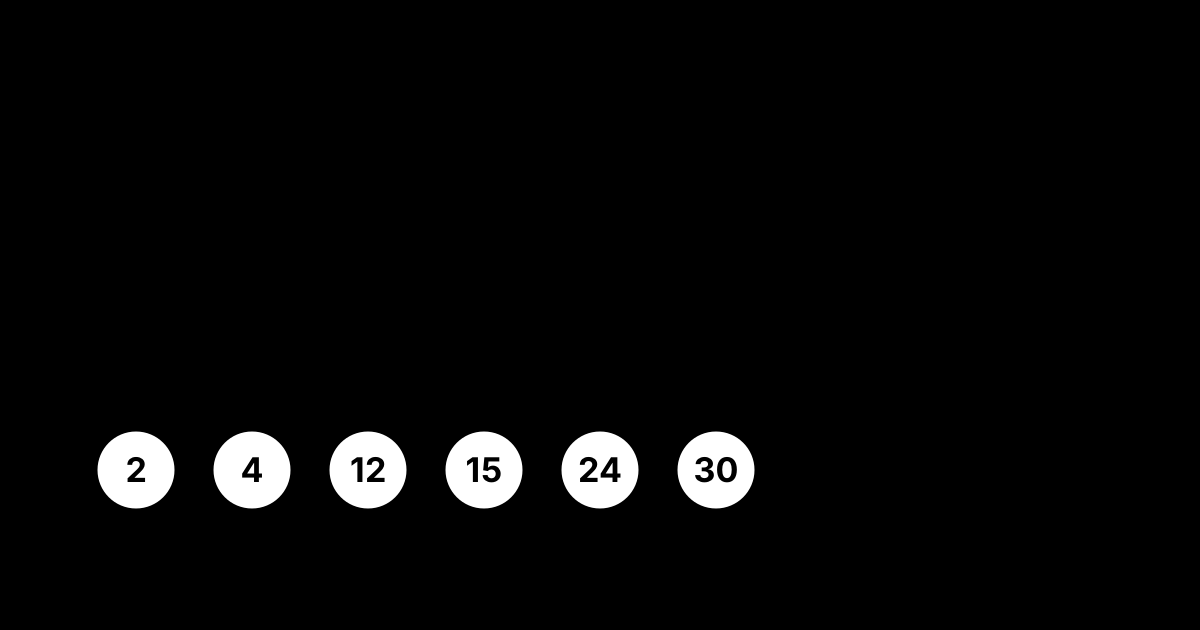
“blood” → B=2, L=12, O=15, O=15, D=4
- 2, 4, 12, 15, 24, 30
The doubled O collapses to four distinct letters; 24 and 30 come from doubling 12 and 15.
Of these six, 12 has appeared 133 times across 1,702 recorded Powerball draws in our data and 4 has appeared 116 times. No number is ever due.
The counts below record how often each has come up in Powerball. That is a record of the past. If this dream keeps recurring, the useful question is where your energy is going — not which numbers to buy.
Numbers from this dream
- 2
- 4
- 12
- 15
- 24
- 30
How often these numbers have been drawn
Counts compiled from actual draw results.
Powerball
Compiled from 1,702 draws up to draw 2090. Counts cover main numbers only; the Powerball is tracked separately.
| Number | Times drawn | Share |
|---|---|---|
| 2 | 131 | |
| 4 | 116 | |
| 12 | 133 | |
| 15 | 118 | |
| 24 | 127 | |
| 30 | 126 |
Latest draw 2090 · September 7, 2026
- 15
- 19
- 28
- 39
- 56
- 3
Common questions
Is a blood dream a bad sign?
In English almost entirely, and the language shows it — bad blood, blood money, bloodbath. There is barely a favourable idiom. Korean interpretation runs the other way and reads blood as wealth, which makes this one of the sharpest reversals between the traditions covered here.
Why would blood mean money anywhere?
Korean dream tradition has a consistent category for it. Sharp physical events — being bitten, being stung, bleeding — are read as gain, on the logic that something definite has happened where nothing was happening before. It is not arbitrary; it is a different starting assumption about what a dream is reporting.
Does it matter whose blood it was?
It is the first thing to sort out. Your own blood keeps the reading on what you are spending. Someone else's moves it onto what a situation is costing a person near you, and the two readings rarely point at the same thing. If you cannot tell whose it was, treat the dream as being about cost in general.
I keep having these dreams. Should I read anything into the repetition?
Recurrence usually marks a situation that has not changed rather than one getting worse, and the detail that shifts between the dreams is the part worth noticing. Interpretation on this site is entertainment, and if something is genuinely worrying you, that is a question for a professional rather than for a dream page.